Replace it when the tank itself leaks, when it is past about 10 to 12 years and needs a major repair, or when hot water runs out much faster than it used to. Many other problems are worth fixing on a younger heater.
How long water heaters last in the Triangle
A standard tank water heater in a Raleigh-area home typically lasts about 8 to 12 years. Some run longer, especially with regular flushing and anode rod changes, and some fail early. A tankless unit that is descaled on schedule can last 15 to 20 years. City water across most of the Triangle is not very hard, but sediment still builds up, and homes on wells in rural areas may see faster wear.
The age is often on the label. Look for the manufacture date on the rating plate, or decode it from the serial number, which usually includes the year and month. If your heater is already past 10 years, it is reasonable to start planning a replacement even if it seems fine. A planned swap is calmer and often less expensive than an emergency one after the tank has already flooded a closet, and it gives you time to compare sizes and types.
Signs the heater is near the end
Some symptoms point clearly to replacement, while others can usually be repaired for much less. The signs below lean toward replacement, especially on a heater that is already near or past 10 years old. When several show up at once, the tank is usually wearing out from the inside, and that kind of failure tends to get worse rather than better.
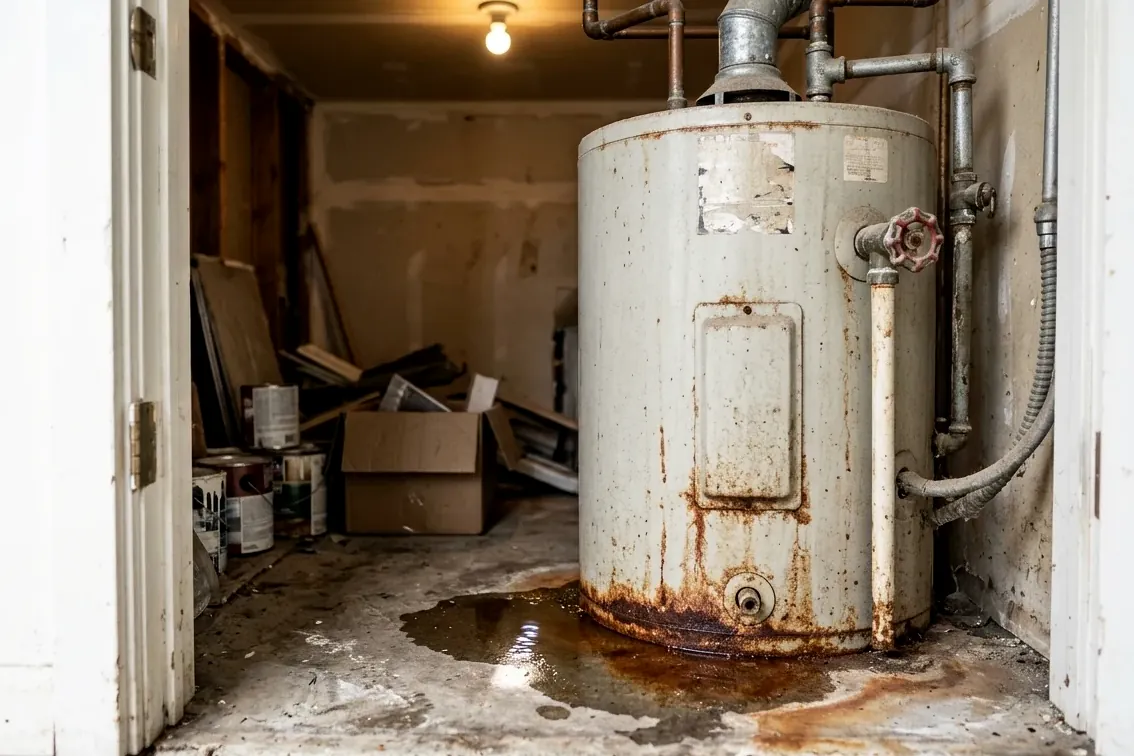
A slow drip from the bottom seam or the side of the tank means the steel has rusted through. That cannot be patched, and it can turn into a sudden flood. Shut off the water to the heater at its cold supply valve and plan for replacement soon. A leak at a fitting or valve on top of the tank is different and may only need a repair, so look closely at where the water is actually coming from before deciding.
- Water leaking from the tank body or the bottom seam
- Rusty or brown hot water while cold water stays clear
- Loud popping, rumbling or banging during heating
- Hot water that runs out much faster than it used to
- Rust or corrosion around the base or the top connections
- Repeated repairs within a year or two
Problems that are usually worth fixing
Plenty of water heater problems have nothing to do with the tank. On a heater that is under about 8 years old and not leaking, these are often worth water heater repair. An electric heater with no hot water may need a new element or thermostat. A gas heater that keeps going out may need a new thermocouple, flame sensor or gas control. A dripping relief valve might mean high pressure or a worn valve.
Sediment is another common fix. A flush can quiet some popping and restore some capacity, although on an old tank with heavy buildup, flushing may stir up more than it clears. A plumber can tell you whether the repair is worth it based on the age and condition of the tank. Typical repairs in the Raleigh area run about $187 to $486, depending on the part.
- Electric: failed heating element or thermostat
- Gas: thermocouple, flame sensor or gas control valve
- Dripping relief valve or leaking drain valve
- Sediment buildup on a younger tank
The repair or replace question
A simple way to think about it: if the heater is past 10 years and the repair costs more than about a third of a new installation, replacement usually makes more sense. Spending several hundred dollars on a 12 year old tank buys time, but the tank keeps aging, and the next failure may be the one that leaks. On a 5 year old heater, the same repair is often an easy call.
Replacement is also a chance to fix things that were not right before. An undersized heater, a missing expansion tank, a drain pan with no drain line or an old relief line that ends in the wrong place can all be corrected. In North Carolina, replacing a water heater generally needs a permit and inspection, and our article on water heater permits in Raleigh covers what is checked.
What replacement typically costs
A standard water heater replacement in the Raleigh area typically runs about $1,487 to $2,940 installed, depending on size, gas or electric, location in the house and code updates needed. Attic and tight closet installs land at the top of the range. Switching to tankless costs more because of venting and gas line changes. The real price comes after a plumber looks at the current setup.
If you are replacing anyway, it is a good time to ask whether the same type still fits. A growing household may need a bigger tank, and a gas home with heavy hot water use may be a good fit for tankless. A smaller household may be fine with a smaller tank. Our comparison of tank and tankless water heaters walks through the trade-offs, including fuel type, winter sizing and long-term upkeep for homes in the Triangle.
What to do if it fails suddenly
If the tank is leaking, close the cold water valve at the top of the heater, then turn off the power at the breaker for an electric unit, or set a gas unit to pilot. Do not try to work on gas or electrical parts beyond those off settings. Attach a hose to the drain valve and run it to a floor drain or outside if you want to empty the tank, but only after the water has had time to cool.
Serenity Plumbing answers 24/7 across Wake County and the Triangle. Call (919) 557-9058, and a plumber can confirm whether the heater needs repair or replacement, bring the right unit and often restore hot water the same day. If you know the size and fuel type of your current heater, or can send a photo of its label, have that handy when you call, since it helps the plumber come prepared with the right replacement.
Follow-up questions
Does flushing a water heater make it last longer?
Regular flushing helps, especially when started early. It clears sediment that insulates the bottom of the tank, makes the burner or element work harder, and causes popping noises. On a tank that has gone many years without flushing, heavy buildup may not fully clear, and a flush can sometimes expose a leak at the drain valve that needs attention.
What is an anode rod and does it matter?
An anode rod is a metal rod inside the tank that corrodes instead of the steel, protecting the tank from rust. It wears out over time, often within a few years. Checking it and replacing it when it is mostly used up can extend the life of a tank, especially if the heater is still young and in good shape.