Drains and sewer
Drain cleaning for slow sinks, tubs and showers in Raleigh
The kitchen sink holds water after the dishes, the shower drains around your ankles, or one bathroom keeps clogging no matter how much you plunge it.
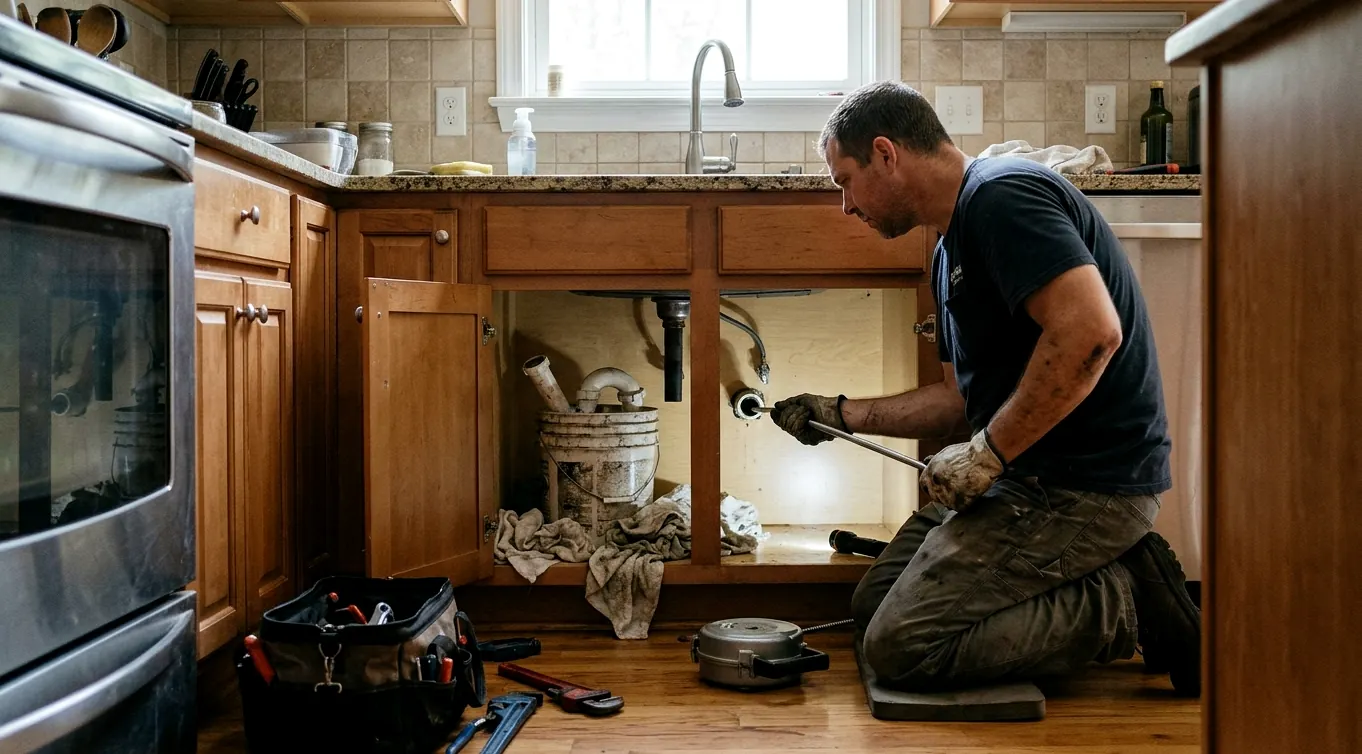
First step on arrival: ask and test
Most household clogs live within a few feet of the fixture: hair and soap in a tub trap, grease and food in a kitchen line, toothpaste and debris in a bathroom sink. Serenity Plumbing clears them with hand augers and drain machines sized to the line, so the cable reaches the clog without scratching porcelain or damaging older pipe. When a clog sits further down or affects several fixtures at once, the problem is usually in the main sewer line instead.
A clean drain should stay clean. If a sink clogs every few months, there is a reason: a sag in the line, a missing vent, an old trap that holds debris or a habit that sends grease down the drain. After clearing the line, our plumber looks for that reason and tells you what will keep it from coming back.
When a slow drain needs a plumber
Water pooling in the tub
A shower or tub that leaves standing water for minutes after use usually has hair and soap packed into the drain or trap.
Kitchen sink backing up
Water rising in one kitchen basin when the other drains, or when the dishwasher runs, points to grease building up in the line.
Gurgling from the drain
Bubbling or gurgling after a fixture drains can mean a partial clog or a blocked vent pulling air through the trap.
Bad smell from a sink
A sour or rotten odor rising from a drain often comes from food and grease decaying on the inside walls of the pipe.
Same clog keeps returning
A drain that needs plunging every few weeks has a deeper problem than a hairball, such as buildup, a sag or poor slope.
Floor drain slow to empty
A laundry or garage floor drain that holds water can back up during heavy use or let sewer gas into the house.
How we clear a household drain
The plumber starts by asking which fixtures are slow and when it started, then runs water at nearby fixtures. If only one drain is affected, the clog is in that branch. If a sink, tub and toilet are all slow together, the blockage is further downstream, and clearing just the sink would miss it. A short check like that keeps the visit focused on the right line.
For a sink or tub, the plumber pulls the stopper and, where needed, removes the trap to clear it by hand. A small drum machine with the right size cable goes through the trap arm and into the branch line until it breaks through the clog. Kitchen lines often need a cutting head to scrape grease off the pipe walls, since a thin cable can punch a hole through a grease plug that closes again within weeks.
After the drain flows freely, the plumber runs hot water through it for several minutes and watches for gurgling or slow spots. Repeat clogs may call for a camera inspection to see whether the line has a belly, a broken joint or roots. If the trap is corroded or the pipe slope is wrong, we explain the repair and what it would cost.
How the job goes
Ask and test
We ask which fixtures are slow and test nearby drains to find whether the clog is in one branch or further down the line.
Open the trap
Stoppers and traps are removed and cleaned by hand where practical, which clears many bathroom sink and tub clogs on its own.
Run the right cable
A drain machine with a cable and head sized to the pipe goes through the clog and scrapes buildup off the pipe walls.
Flush and watch
Hot water runs through the line for several minutes while the plumber listens and watches for any slow spots or gurgling.
Find the cause
If the drain clogs often, we check slope, venting and trap condition and recommend a camera look when the cause is deeper.
Drain problems common in Triangle homes
Older Raleigh homes with cast iron drains, common in houses built before the 1970s, collect scale and rust on the inside of the pipe. That rough surface catches grease and debris, so a kitchen line in a house near Boylan Heights or Oakwood can clog more often than a newer PVC line. Galvanized drain lines from the same era narrow over time as they corrode.
Newer homes in places like Apex and Morrisville have smooth PVC, but they bring their own patterns: long horizontal runs to kitchen islands, garbage disposals sending food into lines with modest slope, and bonus room bathrooms on long branches. In rural parts of the Triangle on septic, a slow drain can also point to a full tank or a drain field problem.
What drain cleaning costs in Raleigh
| Job | Typical range |
|---|---|
| Bathroom sink or tub drain cleared | $137 to $246 |
| Kitchen sink line with grease buildup | $168 to $317 |
| Laundry or floor drain cleared | $157 to $294 |
| Camera look after a repeat clog | $187 to $342 |
Access to the line, the length of the run and how hard the buildup is change the price. Clogs reached only from a roof vent or behind a fixture take longer. See every range in our plumbing cost guide.
Questions about drain cleaning
Is it okay to use chemical drain cleaner before calling?
We recommend against it. Chemical openers produce heat and caustic residue that can soften old PVC joints and eat at cast iron and galvanized pipe. They often fail to clear the full clog. A plunger, or pulling the stopper and cleaning out hair, is a safer first try.
Why does my kitchen sink keep clogging every few months?
Grease and food solids coat the inside of the line a little at a time, especially in older or long runs with modest slope. Each clearing opens a channel, but if the walls are not scraped clean, the channel narrows again. A cutting head that cleans the full pipe diameter helps, and if it keeps happening, a camera look can show whether the line has a sag.
How do I know if it is a drain clog or a sewer line problem?
Look at how many fixtures are involved. One slow sink or tub is usually a local clog. If a toilet gurgles when the tub drains, water backs up into a shower when the washer empties, or the lowest drain in the house overflows, the main line is likely blocked. That needs to be cleared from a cleanout rather than from a sink.
What should never go down a garbage disposal or kitchen drain?
Grease, oil and fat are the biggest problems, since they cool and stick to the pipe. Coffee grounds, eggshells, rice, pasta, potato peels and fibrous scraps like celery also cause clogs. Wipe greasy pans with a paper towel before washing, run cold water while the disposal runs, and keep a strainer in the second basin.
Related
Related plumbing services
Main Line Clog Clearing
Sewage is coming up in the lowest tub or shower, toilets gurgle when the washer drains, and every fixture in the house...
Learn moreHydro Jetting
Your sewer or kitchen line keeps clogging after it has been snaked, and you want the inside of the pipe cleaned out...
Learn moreSewer Camera Inspection
You are buying an older home, a sewer line keeps backing up, or you have been told the line needs replacing and want to...
Learn moreGarbage Disposal Repair & Installation
Your disposal hums but will not spin, trips its reset button, or leaves a puddle in the sink cabinet, and the kitchen...
Learn morePlumbing problem right now?
Call and a person answers, day or night. A plumber from our downtown Raleigh office comes to you.