Emergency and leaks
Slab leak repair for Raleigh homes built on concrete
A warm spot on the floor, water seeping at a baseboard or a meter that never stops points to a pipe leaking under your concrete foundation.
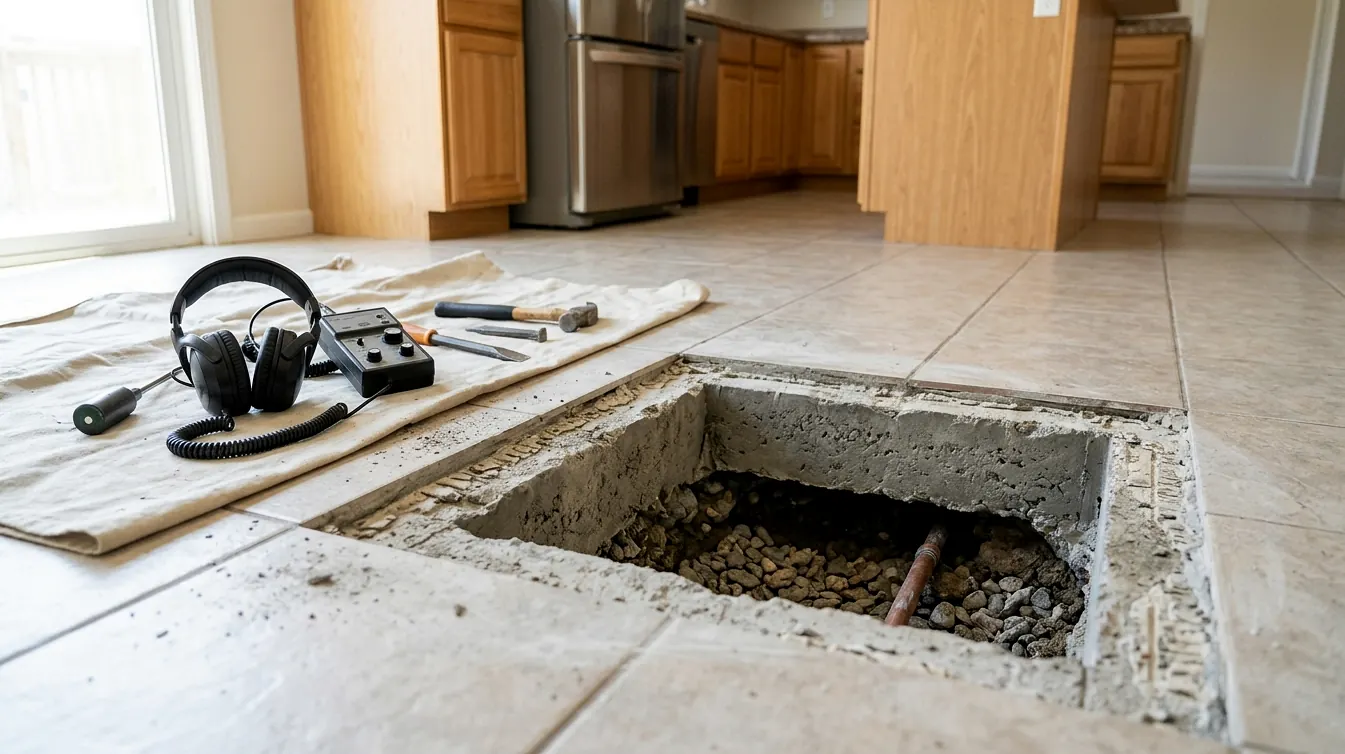
First step on arrival: confirm the leak
In a slab home, the water lines often run through or beneath the concrete, so a leak can go on for weeks with no puddle to show for it. Over time it can wash out soil under the slab and damage flooring from below. Serenity Plumbing locates slab leaks with acoustic equipment and line isolation, then lays out the repair choices so you can pick the one that suits the house and your budget.
There are three common ways to fix a slab leak. We can open the concrete directly over the leak and repair that section, abandon the leaking line and reroute a new one through walls or the attic, or replace the supply piping in the whole house. Each has trade-offs in cost, mess and how long the fix will last, and we price every option before any concrete is cut.
How a slab leak usually shows itself
Warm floor patches
A hot water line leaking under tile or wood floors heats the slab above it, leaving a warm area you can feel barefoot.
Water heater always running
If the heater cycles even when nobody is using hot water, it may be refilling to replace water lost through a slab leak.
Damp baseboards or carpet
Moisture wicking up at the edge of a room, especially along an interior wall, can come from a line leaking beneath the concrete.
Cracks in tile or slab
New cracks in floor tile or the slab itself can appear as escaping water washes soil away from under the foundation.
Water sound underfoot
A faint hiss or rush near the floor when every fixture is off is often a pressurized line escaping through the concrete.
Unexplained high bill
A steady jump in water use on your bill, with no new habits to explain it, is one of the earliest slab leak signs.
How we find and fix a leak under the slab
We start by confirming the leak is on the house side and figuring out whether it is on the hot or cold line, which changes where to look. The plumber then pressure tests the isolated line and uses an acoustic ground microphone to listen for the leak through the floor. The goal is to narrow the leak to a spot small enough that a single opening will reach it.
If you choose direct access, the plumber cuts a neat opening in the slab, digs down to the pipe, repairs the leaking section and checks the exposed pipe for more wear. The hole is then backfilled and patched with concrete. This keeps the original routing and is often the lowest cost option for a single leak, but flooring over the area has to come up.
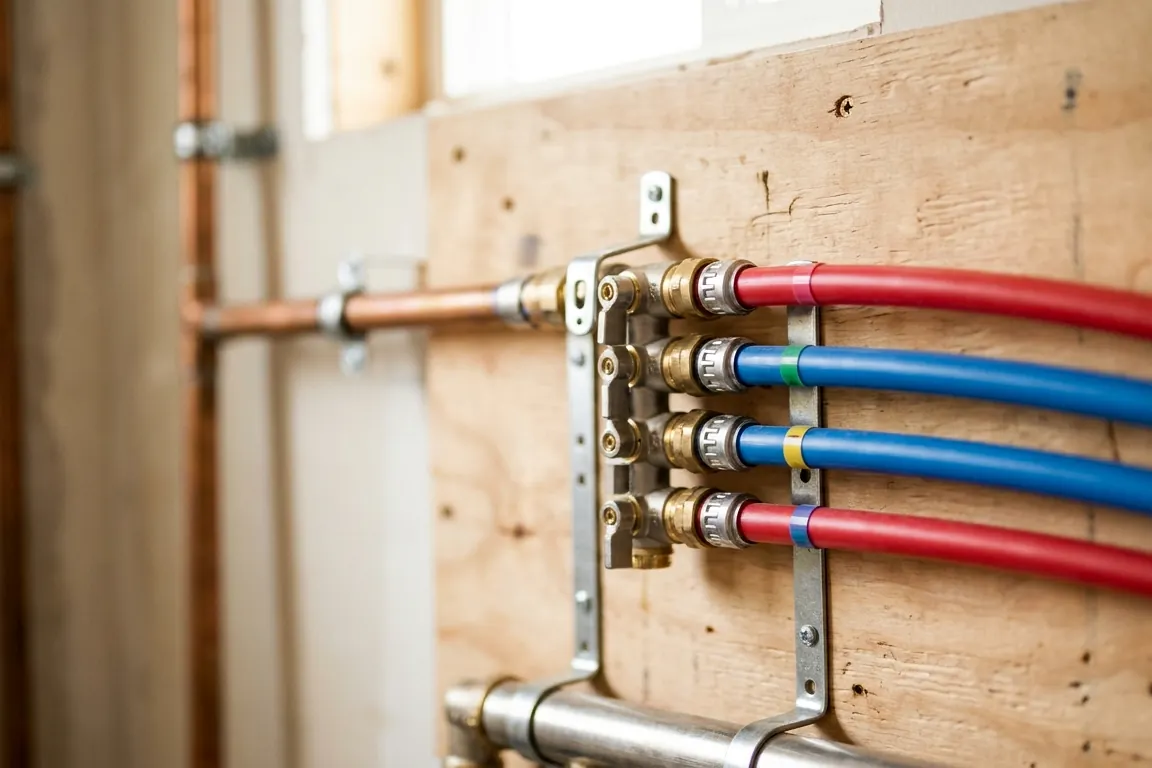
A reroute abandons the leaking line under the slab and runs new PEX or copper through walls, ceilings or the attic to the same fixtures. It avoids breaking concrete and removes that run from the slab for good, which matters if the pipe has started leaking in more than one place. When the whole system is aging, whole-house repiping may make more sense than chasing one leak at a time.
How the job goes
Confirm the leak
A meter test and line isolation confirm a leak on the house side and tell us whether the hot or cold line is affected.
Pinpoint the location
Pressure testing, acoustic listening and thermal imaging narrow the leak to a small area of the slab before anything is opened.
Choose the repair
You get prices for direct access, a reroute and, if it applies, repiping, with the trade-offs of each one explained plainly.
Make the repair
The plumber opens the slab or runs the new line, repairs or replaces the pipe and pressure tests the work before closing up.
Patch and confirm
Concrete openings are backfilled and patched, the meter is checked again, and you get notes on what was done and where.
Slab leaks in the Triangle
A lot of Raleigh's older housing sits on crawl spaces, but slab foundations are common in townhomes, some ranch houses and many subdivisions built across Wake and Johnston counties. In those homes, copper supply lines laid in or under the slab can wear where they rub against concrete or gravel, and water chemistry over many years can thin the pipe from the inside. A leak that starts as a pinhole tends to grow.
Red clay soil adds its own pressure. It swells when it is wet and shrinks during dry summers, which can move a slab enough to stress the pipes beneath it. Homes in Garner, Clayton and the newer edges of Raleigh feel this after long dry spells followed by heavy rain. If one slab leak appears, it is worth having leak detection run on the other lines under the house too.
What slab leak repair costs
| Job | Typical range |
|---|---|
| Slab leak location with acoustic equipment | $364 to $689 |
| Direct access repair through the slab | $1,187 to $2,764 |
| Single line reroute through walls or attic | $1,436 to $3,312 |
| Whole-house repipe, slab home | $4,870 to $9,840 |
The location of the leak, the type of flooring above it and how far a reroute has to travel decide most of the price. Flooring replacement is not included in these ranges. See every range in our plumbing cost guide.
Questions about slab leak repair
Is it better to reroute a slab leak or break through the floor?
It depends on the pipe and the house. If the line is otherwise in good shape and the leak sits under an easy floor, direct access can cost less. If the pipe has leaked before, sits under expensive tile or hardwood, or is likely to fail again, a reroute usually makes more sense.
Can a slab leak damage my foundation?
Over time, it can. Water escaping under pressure can wash fine soil out from under the slab and, in clay soil, make it swell unevenly. Most slab leaks are found before that becomes a structural problem, but it is a good reason not to let one run for months. If you see new cracks, have a foundation contractor look after the plumbing is repaired.
How long does a slab leak repair take?
Locating the leak usually takes one to three hours. A direct access repair is often finished in a day, with the concrete patch curing afterward. A reroute through walls or the attic can take one to two days depending on distance and access. Whole-house repiping takes longer, usually several days.
Why does my slab leak only show up on the hot water side?
Hot water lines expand and contract every time they heat and cool, which rubs the pipe against concrete and gravel. Heat also speeds up corrosion inside copper. Together, those make hot lines under a slab more likely to wear through first. A warm floor patch or a water heater that runs when nobody is using hot water are the usual clues.
Related
Related plumbing services
Leak Detection
Your water bill jumped, the meter keeps spinning with everything off, or a patch of floor feels damp, but there is no...
Learn moreWhole-House Repiping
Leaks keep popping up in different places, the water runs rusty or weak, or an inspector flagged the old supply pipes...
Learn moreWater Line Repair
There is a soft, wet patch in the yard that never dries out, or your water bill jumped and nothing inside the house is...
Learn morePlumbing problem right now?
Call and a person answers, day or night. A plumber from our downtown Raleigh office comes to you.