Backflow and water quality
Water softener installation for Raleigh and Triangle hard water
White crust is building on your faucets and shower glass, soap will not lather well, and your water heater is getting louder as scale collects inside it.
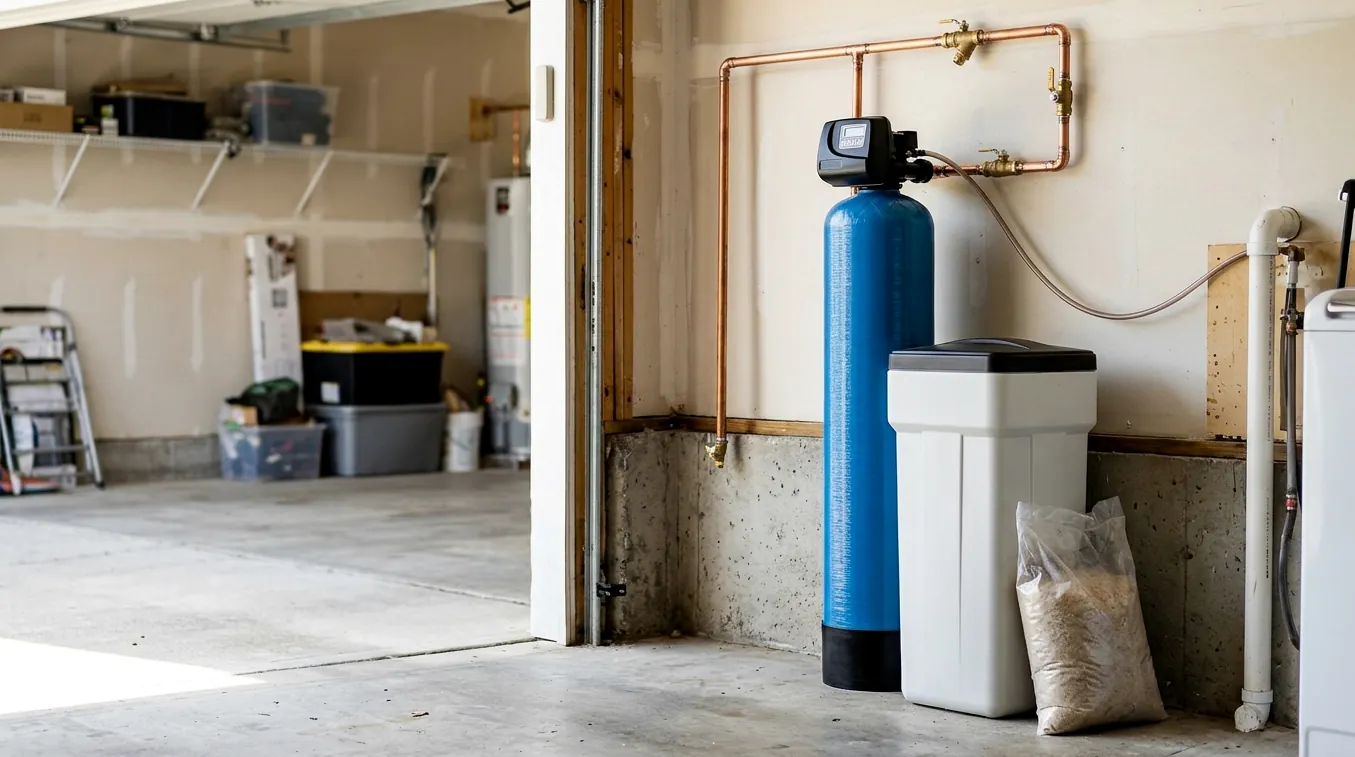
First step on arrival: test the water
Hard water carries dissolved calcium and magnesium. When it is heated or left to evaporate, those minerals come out as scale on fixtures, glass, dishwasher racks and the inside of water heaters and pipes. A water softener swaps those minerals for sodium or potassium as water passes through a bed of resin beads, then periodically flushes the collected hardness down a drain during a regeneration cycle.
Serenity Plumbing installs water softeners for homes across Raleigh and the Triangle with its own plumbers. We start with a hardness test, because many city water customers in the area do not need a softener, while many homes on private wells do. If a softener is the right answer, we size it to your hardness and household use, install it with a bypass valve, and pipe its drain correctly.
Signs hard water is causing trouble
Crust on fixtures
White or tan buildup around faucet aerators, showerheads and the base of fixtures is mineral scale left behind as water dries.
Spotty dishes and glass
Cloudy glasses and spotted shower doors that come back days after cleaning point to high calcium and magnesium levels.
Popping water heater
Rumbling or popping from a tank heater often comes from scale layered on the bottom, which also wastes energy.
Soap will not lather
Hard water reacts with soap to form scum, so shampoo and dish soap do not foam well and leave a film on skin.
Short fixture life
Cartridges, toilet fill valves and tankless heaters failing early is often a sign of scale building up inside their passages.
Well water at home
Homes on private wells in rural Triangle counties often have harder water than municipal systems, and it is worth testing.
How we choose and install a softener
We test your water on site for hardness and check for iron, which affects what kind of softener or pre-filter you need. We also ask how many people live in the home and how many bathrooms there are. Those numbers set the grain capacity. An undersized softener regenerates too often and wears out; an oversized one costs more up front and can let resin sit unused long enough to channel.
Installation goes at the main line after the pressure tank on a well, or after the main shutoff on city water, usually in the garage, utility room or crawl space. We put in a three-valve or manufacturer bypass so you can isolate the unit, and we leave the outdoor spigots on hard water when practical, since softened water is not needed for the lawn. The brine tank sits beside the resin tank.
The drain line from the control valve runs to a standpipe, floor drain or laundry drain with an air gap, never tied directly into the drain, so wastewater cannot siphon back into the softener. The brine overflow gets its own line. We program the unit for your hardness and household size, set regeneration for the middle of the night, load salt, and walk you through checking levels and putting the unit in bypass.
How the job goes
Test the water
We measure hardness and iron at the tap so the softener is sized and configured for your actual water, not a guess.
Size the unit
Household size, bathroom count and hardness level set the grain capacity and the regeneration settings for the control valve.
Plumb with bypass
We cut the softener into the main line with a bypass, leaving outside spigots on unsoftened water when the piping allows it.
Pipe the drain
The regeneration drain and brine overflow run to a proper drain with an air gap so wastewater cannot siphon backward.
Program and explain
We set the controller, run a test regeneration, load salt, and show you how to check levels and use bypass mode.
Hard water around Raleigh and the Triangle
Water from the City of Raleigh, Cary, Durham and OWASA comes mostly from surface reservoirs like Falls Lake, Jordan Lake and Lake Michie, and it tends to be soft to moderately hard. Many homes on those systems do not need a softener at all, which is why we test first. If your scale problem is mostly on glass and fixtures, a whole-house filter aimed at taste and chlorine may be the more useful upgrade.
Homes outside city service, on private wells in parts of Johnston, Franklin, Harnett, Granville and Chatham counties, are a different story. Groundwater there can carry noticeable hardness and sometimes iron that leaves orange stains. In those homes, a softener protects water heaters, tankless units and fixtures, and it can be paired with an iron filter ahead of it. Homes with tankless water heaters see the biggest benefit, since scale clogs their heat exchangers fast.
What softener installation usually costs
| Job | Typical range |
|---|---|
| Water hardness and iron test | $27 to $48 |
| Standard softener for 1 to 3 people, installed | $1,287 to $1,964 |
| Larger softener for 4 or more people, installed | $1,693 to $2,587 |
| Iron pre-filter added ahead of softener | $743 to $1,318 |
| Replacing an existing softener in place | $1,047 to $1,836 |
Grain capacity, valve type, whether an iron filter is needed, and how much repiping the install location requires move the price most. You get the exact figure after a plumber tests your water. See every range in our plumbing cost guide.
Questions about water softener installation
Does Raleigh city water need a softener?
Often not. Water from the City of Raleigh's reservoirs usually tests soft to moderately hard, so many homeowners never see heavy scale. Some households still notice spotting on glass and prefer softer water. A quick hardness test settles it. If your number is low, we will tell you so, and you can put that money toward something else.
Will a softener make my water taste salty?
Not noticeably in most homes. The amount of sodium added depends on how hard the water was to begin with, and at moderate hardness it is small. People on a low-sodium diet can use potassium chloride instead of salt, or we can leave one kitchen tap on unsoftened water. A softener does not filter taste or odor; that takes a separate filter.
How much maintenance does a water softener need?
Mostly salt. Check the brine tank every month or so and keep it about a third to half full, and break up any hard salt bridge that forms across the top. Clean the brine tank every year or two. Resin beds typically last many years on city water, less on well water with iron, and the control valve may need service eventually.
Can the softener drain into my septic system?
Many installs on rural Triangle properties do drain regeneration water to the septic system, and modern high efficiency softeners use far less water and salt per cycle than older models. If you have concerns about your tank or drain field, we can discuss alternate discharge options. Give us a call at (919) 557-9058 and tell us about your well and septic setup.
Related
Related plumbing services
Whole-House Water Filtration
Your tap water smells like a swimming pool, leaves grit in faucet screens, or comes from a well with an odor or color...
Learn moreWater Heater Repair
The shower ran cold this morning, the tank is making popping noises, or there is a puddle forming around the base of...
Learn moreTankless Water Heater Installation
You want endless hot water and a freed-up closet or garage corner, but you are not sure your gas line, venting and...
Learn moreFaucet Repair & Installation
The kitchen faucet drips all night, the handle is stiff, or the new faucet you bought has been sitting in its box for...
Learn morePlumbing problem right now?
Call and a person answers, day or night. A plumber from our downtown Raleigh office comes to you.