Water heaters
Planning and installing tankless water heaters in Raleigh homes
You want endless hot water and a freed-up closet or garage corner, but you are not sure your gas line, venting and household demand can support a tankless heater.
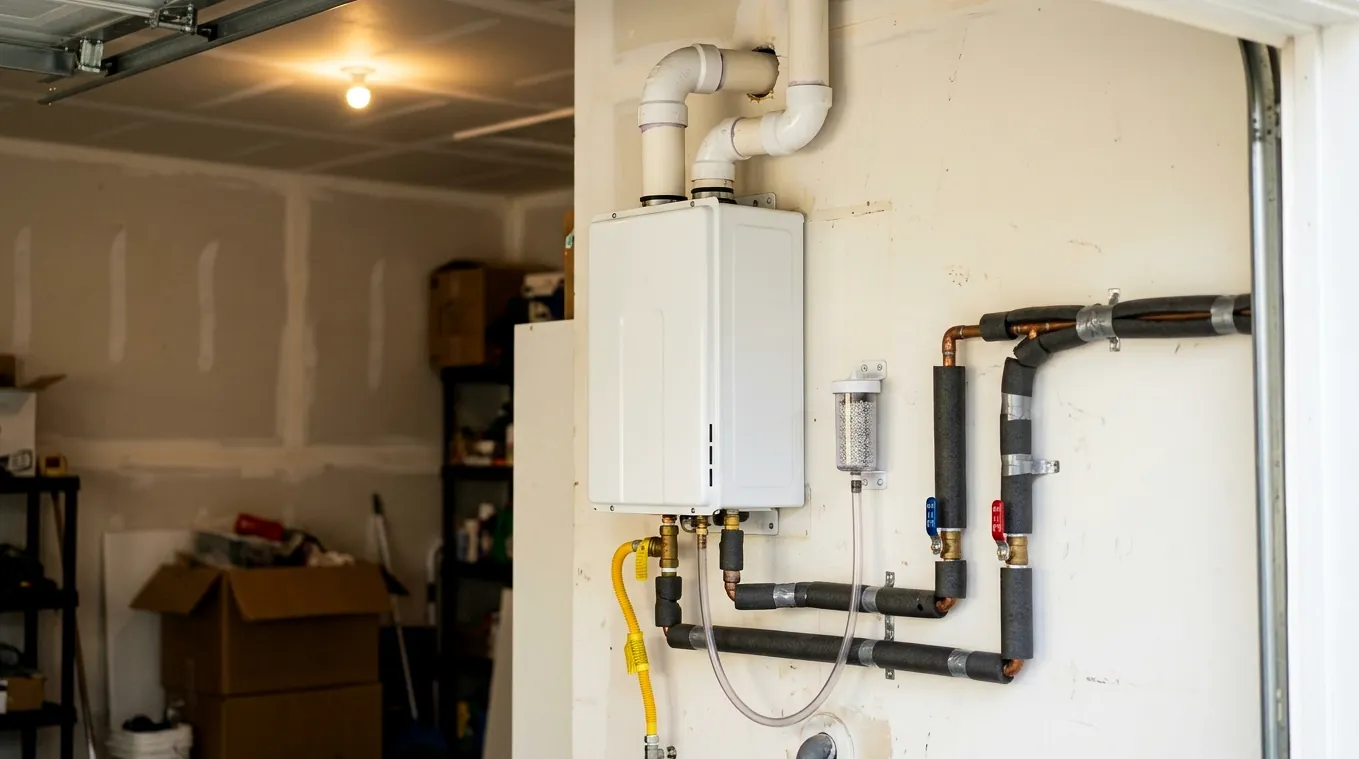
First step on arrival: measure demand
A tankless water heater heats water only when a tap opens, so it never runs out during back-to-back showers and it takes a fraction of the space of a tank. The tradeoff is that it needs a lot of power for a short time. Most gas units draw far more fuel per hour than a tank, and electric units can need several large circuits. Getting the supply right is most of the job.
Serenity Plumbing plans each install around three things: how many fixtures you run at once, the gas or electric capacity at the house, and how the unit will vent and drain. We size for Raleigh winter water temperatures, not summer ones, so the heater keeps up in January. Our guide to tank versus tankless in Raleigh lays out when each makes sense, and we will tell you plainly if a tank is the better fit.
When a tankless heater makes sense for your home
Tank near end of life
Your tank is ten years or older, so replacement is coming soon and switching now avoids paying for a tank twice.
Hot water runs out
A busy household drains the tank every morning, and a larger tank will not fit in the space you have.
Space is tight
You want the closet, garage corner or crawl space floor back, and a wall-mounted unit frees up that room.
Gas already at the house
Natural gas or propane is available, which keeps operating costs down compared with a whole-house electric tankless unit.
Long stays planned
You expect to stay in the home for years, giving the higher up-front cost time to pay back.
Remodel underway
A kitchen, bath or garage project already has walls open, making gas, vent and condensate routing simpler.
How Serenity installs a tankless water heater
Sizing comes first. We count the fixtures you are likely to run together, such as two showers and a dishwasher, add their flow, and match that to a unit's output at the temperature rise needed in winter, when incoming water is coldest. Then we measure the gas line from the meter. Many homes need a larger line or a separate run to the heater, and we plan that as part of the job through our gas line installation work.
Venting and drainage come next. Condensing gas units vent through PVC to the outside, either through a wall or the roof, and produce acidic condensate that needs a drain line, often with a neutralizer. Non-condensing units need stainless vent pipe. Outdoor-rated models skip interior venting but need freeze protection power. We place the unit where service valves and the inlet filter are easy to reach later.
Installation includes isolation valves for future descaling, a pressure relief valve, gas connections leak tested at every joint, and the permit and inspection North Carolina generally requires. We set the outlet temperature, run every fixture to confirm steady flow, and show you how to clean the inlet screen. To talk through whether your house is a good candidate, call (919) 557-9058; we answer 24/7.
How the job goes
Measure demand
We total the flow of fixtures used together and size the unit for winter incoming water, not mild summer temperatures.
Check fuel supply
The gas meter, line size and run length are measured, or the electric panel is checked for the required circuits.
Plan vent and drain
We pick a vent path to the outside and a route for the condensate line that meets code and stays easy to service.
Install and connect
The unit is mounted with isolation valves, relief valve, gas or electric supply, venting and condensate drain all connected.
Commission and teach
We fire the heater, test every fixture, set the temperature, and show you the filter and descaling valves.
Tankless sizing for Triangle water and homes
Incoming water temperature in the Triangle swings with the seasons. Water from Falls Lake, Jordan Lake and other surface sources arrives noticeably colder in winter than in summer, and well water in rural Wake and Johnston counties stays cool all year. A tankless heater that looks generous in August can fall short in February, which is why we size to the colder months.
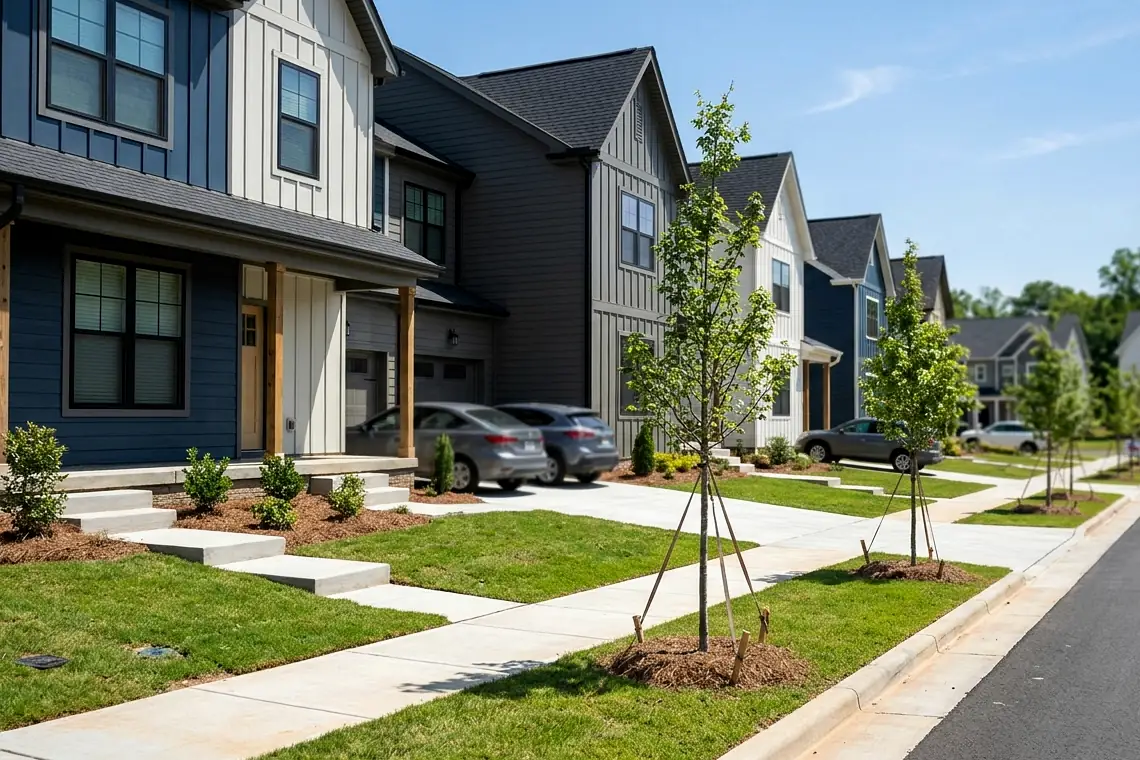
House style shapes the install. Many newer homes in Holly Springs, Apex and Brier Creek have gas service, a garage wall for mounting, and short paths for venting, which makes them strong candidates. Older homes inside the Beltline may have small gas lines sized for a furnace and range only, and crawl space or closet locations where venting takes more planning. Some homes on propane need the tank regulator checked as well.
Tankless installation price ranges
| Job | Typical range |
|---|---|
| Gas condensing tankless, installed, replacing a tank | $3,487 to $5,764 |
| Gas line upsizing or new run to the heater | $437 to $1,286 |
| New PVC venting and condensate drain with neutralizer | $318 to $743 |
| Whole-house electric tankless, installed | $2,264 to $3,918 |
| Descaling isolation valve kit and inlet filter | $137 to $264 |
Unit capacity, the gas line distance from the meter, vent routing and whether the old tank location works all move the price. We confirm the real number after a site visit. See every range in our plumbing cost guide.
Questions about tankless water heater installation
Will a tankless heater keep up with two showers at once in winter?
A properly sized gas unit will. The key is matching its output to the temperature rise needed when incoming water is coldest. A unit chosen on summer numbers can drop temperature when two showers and a sink run together in February. We size for the cold months so that does not happen.
Why might my gas line need upgrading for a tankless heater?
Gas tankless units burn a lot of fuel for short periods, often several times more per hour than a tank. A line sized years ago for a furnace, range and tank heater may not deliver enough gas for all of them at once. We measure the line length and size and calculate what the new load needs.
Can a tankless water heater be installed outside?
Many models are made for outdoor mounting, which saves on interior venting. They use electric freeze protection, so they need power at all times, and the exposed water lines should be insulated. During a hard Triangle freeze with a power outage, an outdoor unit is at risk, so we discuss drain-down steps with you before choosing that location.
What maintenance does a tankless water heater need each year?
Most need a periodic descale, where a pump circulates a cleaning solution through the heat exchanger using the isolation valves installed with the unit. How often depends on your water; well water with more minerals needs it more frequently. The small inlet filter screen also needs cleaning now and then. We show you where everything is.
Related
Related plumbing services
Tankless Water Heater Repair
Your tankless heater is flashing an error code, shutting off mid-shower, or sending bursts of cold water between hot...
Learn moreWater Heater Replacement
Water is seeping from the bottom of the tank, or the heater is old enough that another repair no longer makes sense...
Learn moreGas Line Installation
You picked out a gas range, a tankless heater or an outdoor grill, and now there is no gas line where the new appliance...
Learn moreHot Water Recirculation Pump
You run the shower or the kitchen tap for a minute or more, watching clean water go down the drain, before hot water...
Learn morePlumbing problem right now?
Call and a person answers, day or night. A plumber from our downtown Raleigh office comes to you.