Emergency and leaks
Burst pipe repair for Raleigh homes, any hour of the day
A pipe has split, water is spraying or pouring into the house, and you need it stopped and repaired before the floors and walls soak through.
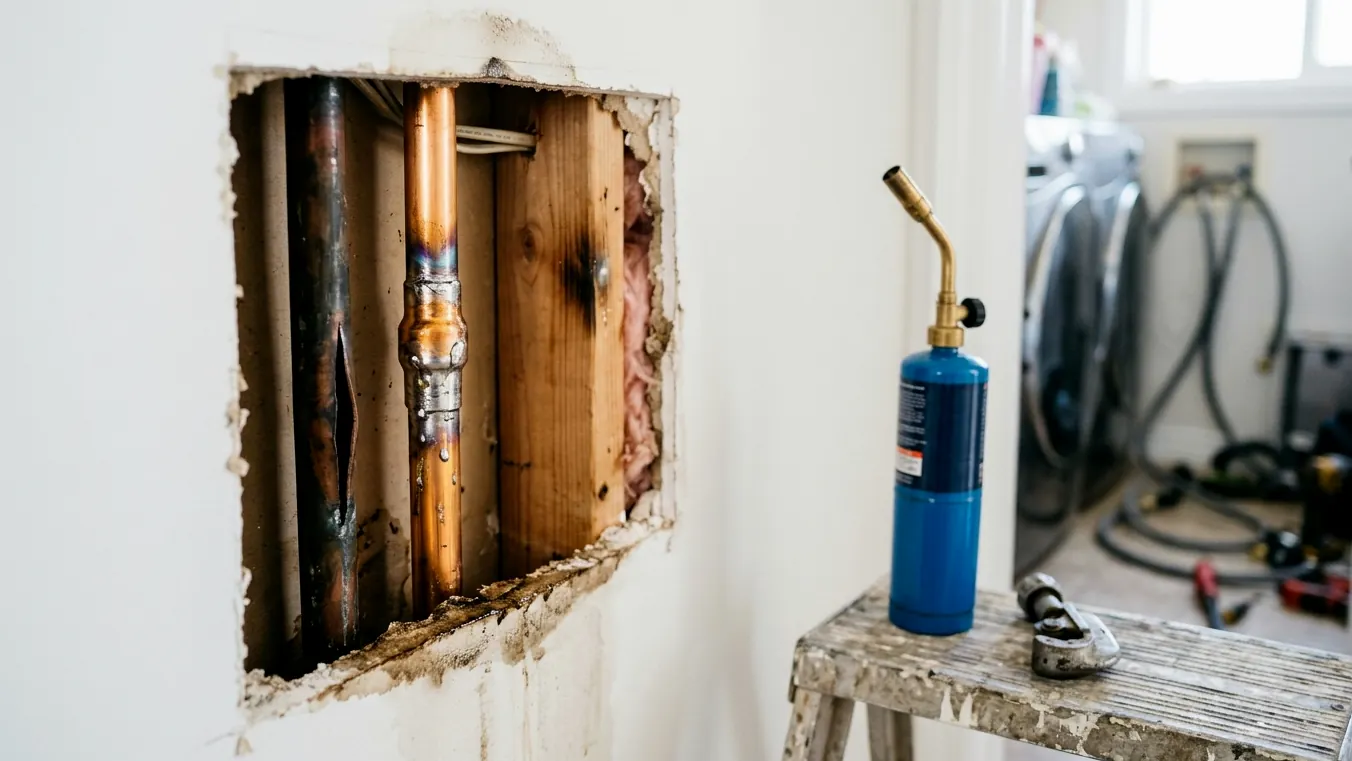
First step on arrival: stop the water
The first job with a burst pipe is closing the main shut-off, and the second is calling a plumber. If you do not know where your valve is, call (919) 557-9058 and we will help you find it while a Serenity plumber heads your way. Our guide on what to do when a pipe bursts covers the steps in more detail.
Pipes burst for a handful of reasons: water froze and expanded, pressure was too high for too long, the pipe corroded through, or a fitting gave way. The cause matters, because it tells us whether the rest of the line is likely to follow. A split from a single freeze is a spot repair. A pinhole in corroded galvanized pipe next to three more weak spots is a different conversation.
Signs a pipe has burst or is about to
Sudden spray or gush
Water is shooting from a wall, ceiling or crawl space pipe, often with a loud hiss you can hear through the floor.
Bulging drywall or ceiling
A sagging spot in drywall, often with a stain spreading from the center, means water is collecting behind it from a nearby line.
Pressure drops all at once
Every fixture loses pressure at the same moment, which often means water is escaping through a large opening upstream of them.
Banging before failure
Loud knocking when valves close, called water hammer, strains fittings over time and often comes before a joint lets go.
Frost on exposed pipe
Pipes in a crawl space or garage with visible frost on a cold morning are at real risk of splitting as they thaw.
Rust colored water
Brown water from one or more taps can mean galvanized pipe is corroding from inside and getting thin enough to burst.
How we repair a burst pipe
The plumber confirms the main valve is fully closed, drains the affected line and finds the break. Water often travels along joists or the top of drywall before it drips, so the wet spot is not always under the failure. Once the split is found, the plumber looks at the pipe on both sides of it for bulges, thinning or green and white corrosion that would make a short repair a waste of money.
Most repairs involve cutting out the damaged section and joining in new pipe. Copper gets soldered or pressed fittings, PEX gets crimp or expansion fittings, and failed polybutylene is usually replaced back to a sound joint. Where a pipe sits on an outside wall or in a cold crawl space, the plumber may reroute it or add insulation so the same freeze does not split it again next winter.
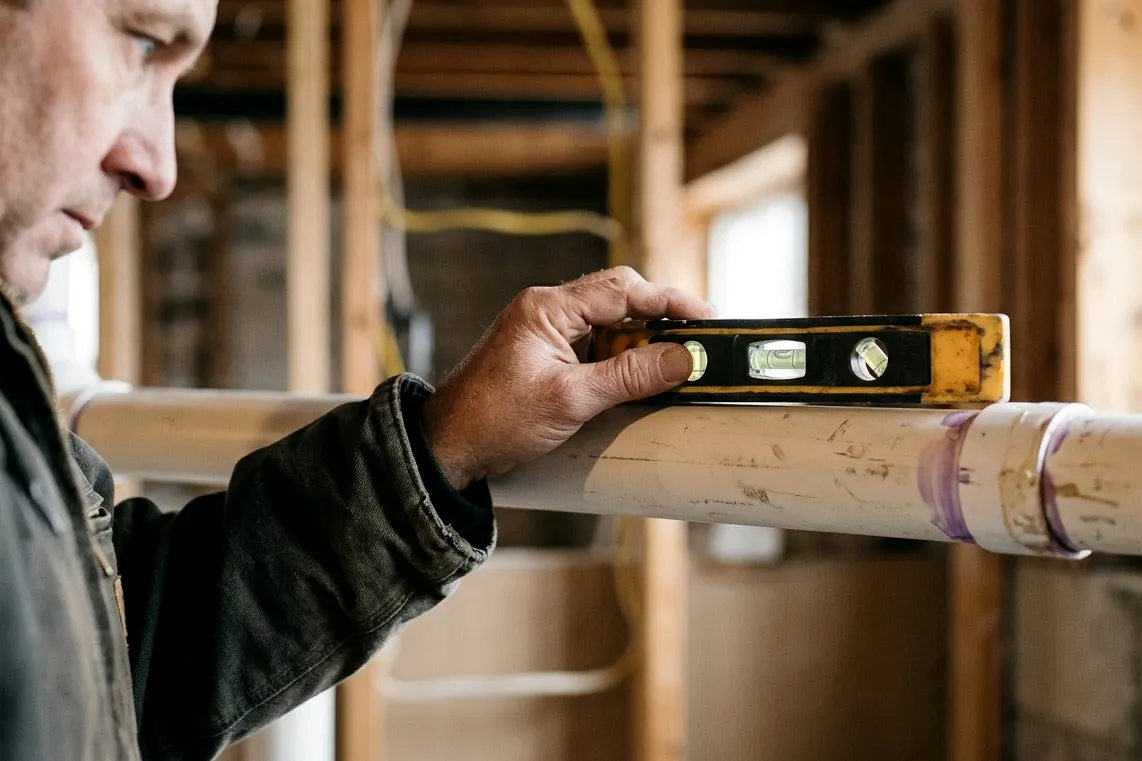
Before turning the water back on, the plumber checks your house pressure. If it sits above 80 psi, a failed or missing pressure reducing valve may have helped cause the burst, and that is worth fixing at the same time. Then the system is refilled slowly to push out air, every fixture is run, and the repair is watched under full pressure.
How the job goes
Stop the water
Close the main valve and turn off power or gas to the water heater, then call us so a plumber can head out right away.
Locate the break
The plumber drains the line, follows the water trail and opens only the area needed to reach the damaged section of pipe.
Inspect nearby pipe
Pipe on either side of the break is checked for corrosion, thinning or freeze damage so the repair reaches sound material.
Replace the section
The split section is cut out and new pipe is joined in with fittings matched to the existing material, then supported properly.
Pressure test and refill
The line is refilled slowly, house pressure is checked against the 80 psi limit, and the repair is watched for leaks before we leave.
What causes burst pipes in Raleigh
Raleigh does not get long cold spells, but it does get sharp ones. A night or two in the teens catches houses that were never built with deep cold in mind: pipes on north facing exterior walls, lines in vented crawl spaces with missing insulation. Many homes, from Hedingham to older ranches inside the Beltline, find their first burst pipe the morning the temperature climbs back above freezing.
Outside of freezes, age is the main driver. Galvanized steel supply lines in older Raleigh homes corrode from the inside until a section gives way. Polybutylene in homes from the late 1970s to mid 1990s tends to fail at its fittings. In some parts of the Triangle, street pressure runs high enough that a home without a working pressure reducing valve puts years of extra strain on every joint and appliance connection in the house.
Burst pipe repair costs in the Raleigh area
| Job | Typical range |
|---|---|
| Accessible pipe section in a crawl space or garage | $236 to $518 |
| Pipe repair inside a finished wall or ceiling | $384 to $867 |
| Polybutylene fitting or short run replaced | $267 to $593 |
| Pressure reducing valve replaced during the visit | $412 to $788 |
Access and pipe material drive most of the cost. Drywall repair and drying out wet materials are separate from the plumbing work and usually handled after the leak is fixed. See every range in our plumbing cost guide.
Questions about burst pipe repair
Is it safe to use electricity after a pipe bursts?
If water has reached outlets, light fixtures, the electrical panel or any appliance, stay out of the wet area and switch off the affected breakers only if you can reach the panel from a dry spot. If you cannot, call the power company. Water in a ceiling light fixture is a reason to leave that circuit off until an electrician checks it.
Why did my pipe burst after the weather warmed up?
When water freezes inside a pipe, the ice builds pressure between the frozen plug and a closed faucet. The pipe often splits during the freeze, but the ice holds the water back. Once it thaws, water flows through the crack. That is why burst pipes are often found the morning after a cold night, when temperatures climb back above freezing.
Should I replace the whole line after one burst?
Not always. A single freeze split in otherwise healthy copper or PEX is a spot repair. If the pipe is corroded galvanized steel or polybutylene, the burst is often the first of several, and replacing the run or repiping the house can cost less over time than repeated emergency visits.
How do I keep pipes from bursting next winter?
Insulate exposed lines in crawl spaces, garages and attics, close crawl space vents during hard freezes, and disconnect garden hoses. On very cold nights, open cabinet doors on exterior walls and let a faucet drip. If a line keeps freezing in the same spot, rerouting it to an interior wall is often the lasting fix.
Related
Related plumbing services
Frozen Pipe Repair
It is a cold morning, a faucet gives a trickle or nothing at all, and you are worried the frozen pipe will split once...
Learn moreEmergency Plumbing
Water is coming through a ceiling, a toilet is backing up into the tub, or the house has no water at all, and you need...
Learn morePressure Reducing Valve Replacement
Faucets bang shut, the toilet fill valve hisses, the water heater relief valve keeps dripping, and a gauge on the hose...
Learn moreWhole-House Repiping
Leaks keep popping up in different places, the water runs rusty or weak, or an inspector flagged the old supply pipes...
Learn morePlumbing problem right now?
Call and a person answers, day or night. A plumber from our downtown Raleigh office comes to you.