Pipes, water and gas lines
Finding and fixing underground water line leaks in Raleigh
There is a soft, wet patch in the yard that never dries out, or your water bill jumped and nothing inside the house is leaking.
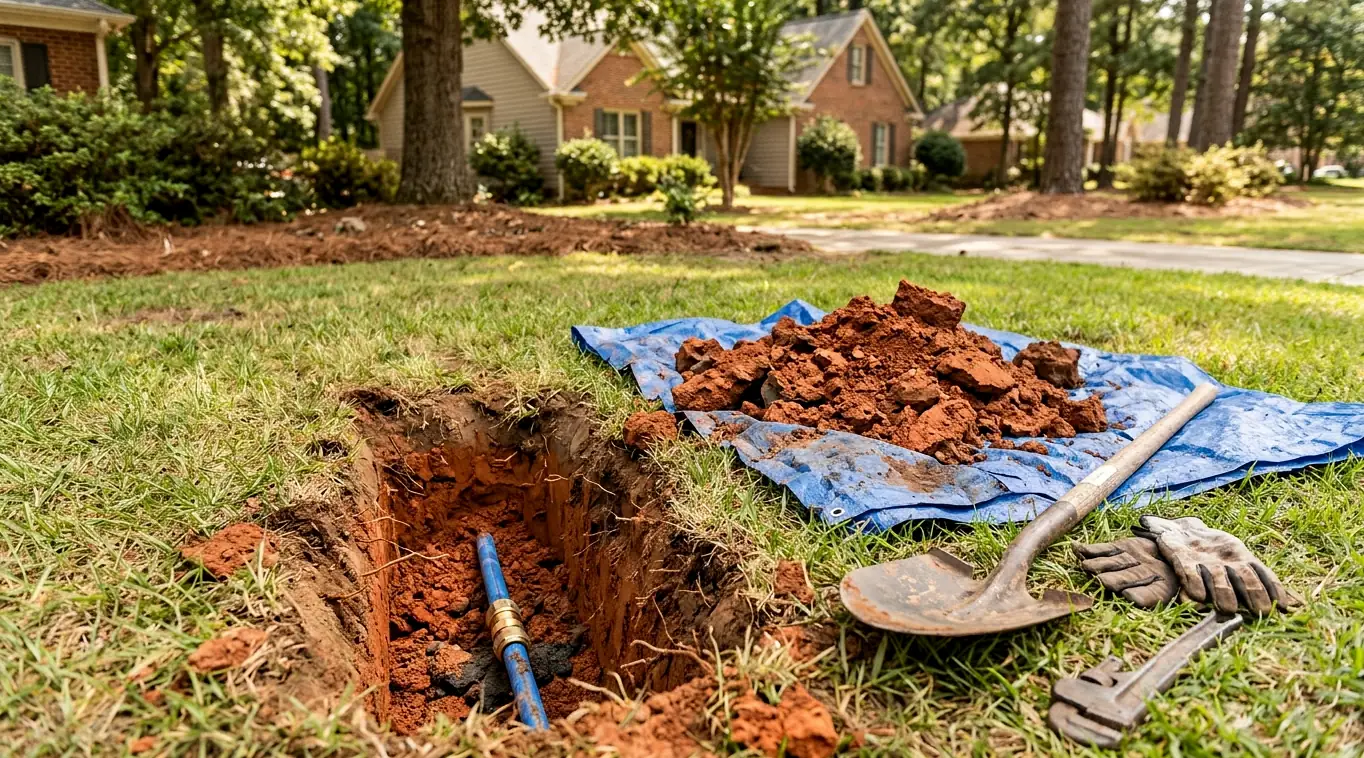
First step on arrival: confirm the leak
The water line that runs from the meter box near the street to your house is buried and out of sight, so a leak can go on for weeks. In most Triangle utilities, the pipe on the house side of the meter belongs to the homeowner, which means the repair is yours to arrange. The good news is that many of these leaks are a single break or a failed joint, not a whole failed line.
Serenity Plumbing locates the leak first, then digs one neat hole to reach it instead of trenching the whole yard. We repair the break with the right coupling or a short new section, test the line, and backfill. If the pipe is too far gone to patch, we will say so and explain replacing the water line as the alternative. Phone (919) 557-9058 any time, day or night.
When an underground water line needs attention
Spinning meter dial
With every faucet and appliance off, the small leak indicator on the meter keeps turning, which points to water escaping somewhere.
A patch that stays soggy
Red clay holds water near the surface, so a constant wet spot or puddle along the line path is a common clue.
Greener strip of grass
A band of lawn that stays greener during a dry July often traces the route of a slowly leaking line.
Sudden pressure drop
A noticeable loss of pressure at every fixture at once suggests a break between the meter and the house.
Higher bill, no indoor leak
When toilets and faucets check out fine but usage climbs month after month, the buried line is the next suspect.
Sinking soil or potholes
Water washing out soil can leave a soft dip in the yard or a small sinkhole over the line.
How Serenity repairs a buried water line
Finding the leak comes before any digging. We check the meter, shut off the house valve to confirm whether the leak is outside, and then use listening equipment along the line path to hear where water is escaping under pressure. On plastic lines that carry sound poorly, we may add a tracer to locate the pipe route first. Our leak detection process keeps the hole small and in the right place.
Once we know the spot, we mark utilities through NC 811 before we dig. We hand dig near the pipe so we do not cause a second break, expose the damaged section, and look at its condition. A split from a shovel or fence post usually takes a repair coupling. A failed fitting or a crushed stretch near a tree root gets a short new section joined to sound pipe on both sides.
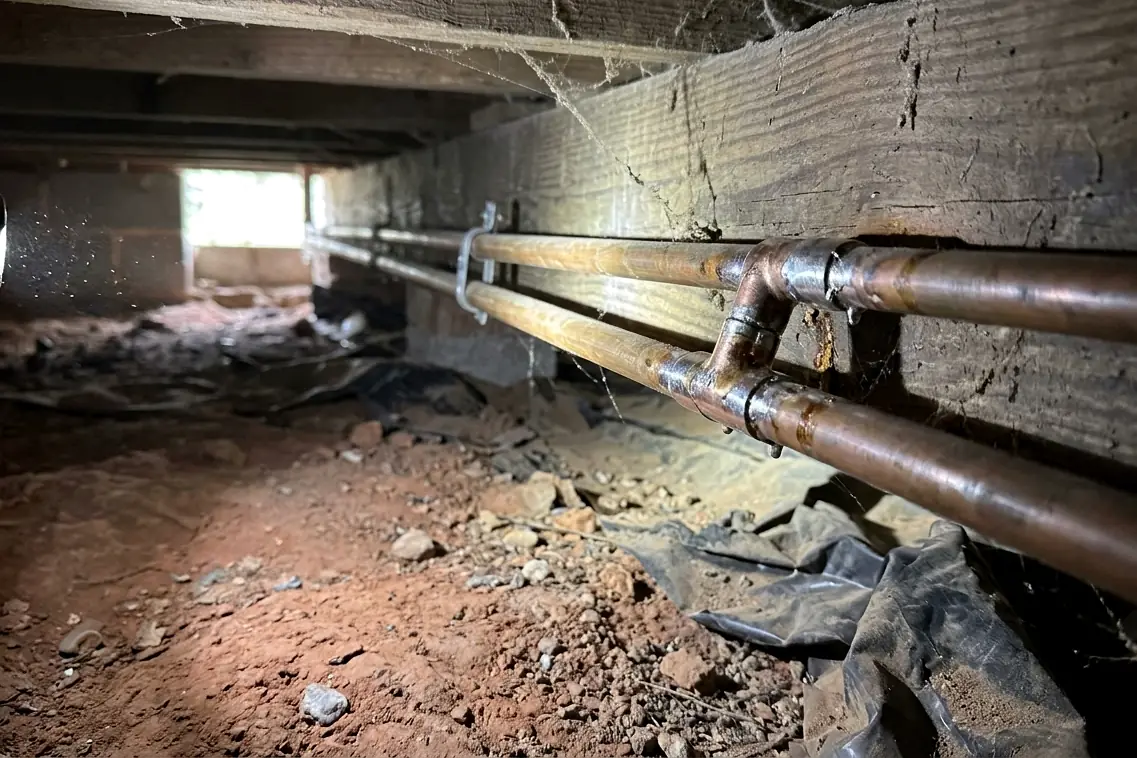
Before backfilling, we open the water slowly, purge the air, and watch the repair under full pressure. We also check the meter again to confirm the dial has stopped moving. Then we backfill in layers, tamp the soil, and set the sod or mulch back as close to how we found it as possible. Red clay settles, so we leave a slight crown that flattens out over a few weeks.
How the job goes
Confirm the leak
We read the meter with the house valve closed to prove the leak is underground and not inside the home.
Locate the break
Listening equipment and pipe tracing pinpoint the leak so we dig one small hole instead of a long trench.
Mark and dig
Utilities are marked through NC 811, then we hand dig around the pipe to avoid causing any new damage.
Repair the pipe
We install a repair coupling or a short new section, matched to the existing pipe material and size.
Test and backfill
The line is tested under full pressure, the meter is checked again, and the hole is filled and tamped in layers.
What causes water line breaks around Raleigh
Tree roots are a big factor here. Willow oaks and maples planted along older streets push roots along the same soft soil a water line was buried in, and over years they can squeeze or crack the pipe. Red clay is another one: it swells when wet and shrinks during dry spells, which puts stress on joints. Lines laid without a sand bed tend to show this sooner.
Damage from other projects is common too. New fences, irrigation systems and mailbox posts often hit a shallow line in newer neighborhoods in Apex and Holly Springs. An occasional hard freeze can also crack a line where it rises out of the ground near the foundation. Older homes in Raleigh proper may still have galvanized or early plastic service lines that are simply worn out.
Typical water line repair prices
| Job | Typical range |
|---|---|
| Leak locating on the service line | $238 to $517 |
| Single break, repair coupling, shallow dig | $412 to $868 |
| Short section replacement, up to a few feet | $687 to $1,347 |
| Repair under a driveway or walkway edge | $1,186 to $2,437 |
| Sod or mulch restoration over the dig | $87 to $226 |
Depth, pipe material, and what sits on top of the leak (lawn, concrete or roots) affect the price most. The final figure comes after a plumber has located the break. See every range in our plumbing cost guide.
Questions about water line repair
Who pays to fix a leak between the meter and my house?
In most Triangle water systems, including City of Raleigh Public Utilities, the utility owns the meter and the pipe on the street side, while the homeowner owns the line from the meter to the house. If the leak is on your side, the repair is yours. If we find the leak is at or before the meter, we tell you so you can report it to the utility.
Can a leak in the yard really raise my bill that much?
Yes. A buried line is under full pressure all day and night, so even a small split can run thousands of gallons a month without making a sound. Because the water soaks into clay instead of showing up indoors, people often notice the bill before anything else. Checking the meter leak indicator with all fixtures off is a quick first test.
Is it better to patch the line or replace the whole thing?
A single break on otherwise sound pipe is usually worth repairing. If the line is old galvanized steel, gray polybutylene, or has failed more than once, more leaks are likely, and replacement starts to make sense. When we expose the pipe, we look at its condition and tell you honestly which way we would go if it were our own house.
What should I do while I wait for the plumber?
Close the main shut-off valve at the house if the leak is large or water is pooling near the foundation. This stops water from feeding the leak on most homes. Our guide on how to shut off your house water shows where the valve usually sits in crawl space and slab homes. Keep pets and children away from any soft ground.
Related
Related plumbing services
Leak Detection
Your water bill jumped, the meter keeps spinning with everything off, or a patch of floor feels damp, but there is no...
Learn moreWater Line Replacement
The water line to your house has leaked more than once, the pressure keeps fading, or the water comes out tinted after...
Learn moreSlab Leak Repair
A warm spot on the floor, water seeping at a baseboard or a meter that never stops points to a pipe leaking under your...
Learn moreEmergency Plumbing
Water is coming through a ceiling, a toilet is backing up into the tub, or the house has no water at all, and you need...
Learn morePlumbing problem right now?
Call and a person answers, day or night. A plumber from our downtown Raleigh office comes to you.