Backflow and water quality
Annual backflow testing for Raleigh irrigation and service lines
A notice from the City of Raleigh says your backflow assembly is due for its annual test, and you need it tested and reported before the deadline.
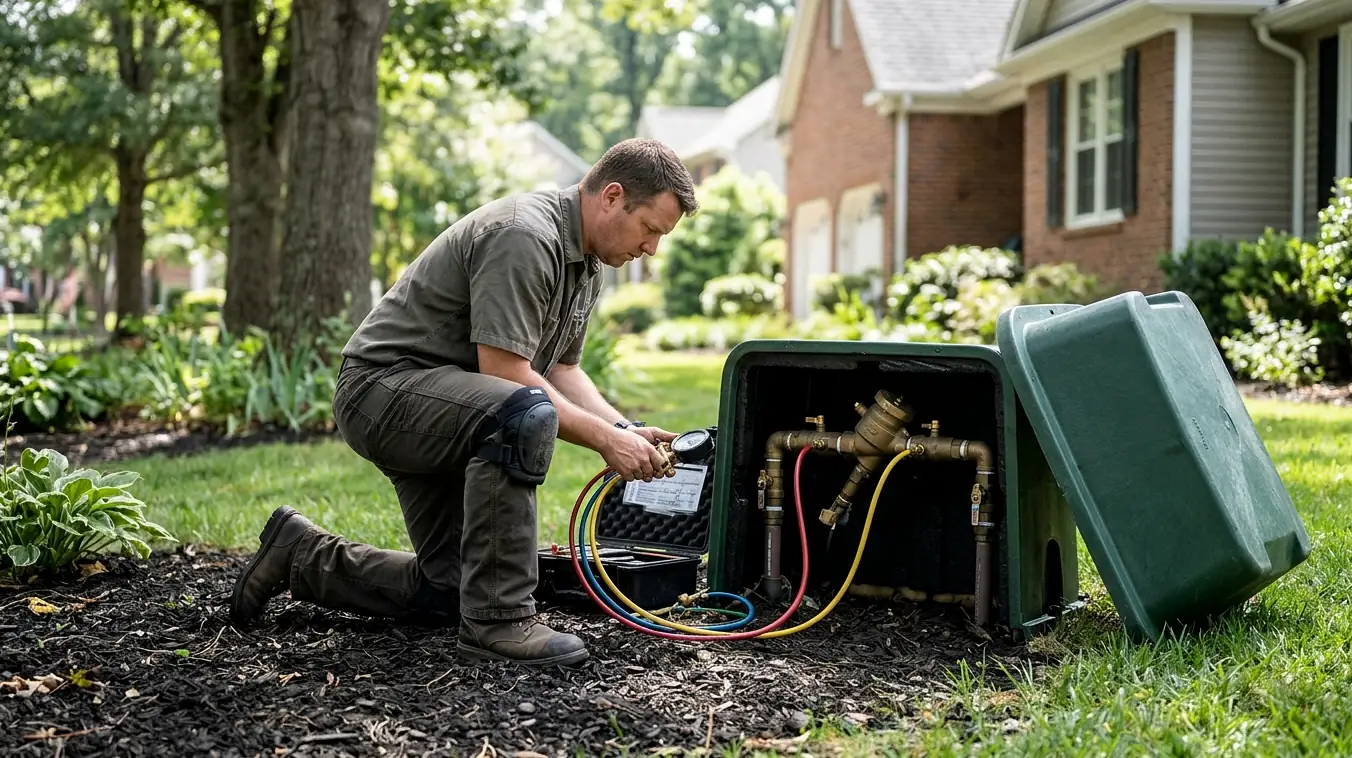
First step on arrival: locate the assembly
A backflow preventer keeps water from your irrigation system or building plumbing from flowing back into the public water main. Fertilizer, pesticide and stagnant water sitting in sprinkler lines are exactly what the city wants kept out. Because the internal check valves and relief valves can stick or wear without any visible sign, the City of Raleigh runs a cross-connection control program and requires testable assemblies on irrigation and certain service connections to be tested every year.
Serenity Plumbing sends its own plumbers to test reduced pressure zone assemblies, double check valve assemblies and pressure vacuum breakers at homes and businesses around Raleigh and the Triangle. The test takes calibrated gauges and a set procedure for each device type. When a device passes, the results go to the water utility. When it fails, we tell you exactly which part failed and repair it, often in the same visit.
When your backflow device needs testing
City test notice arrives
Raleigh mails reminders when an assembly on file is coming due, and the test needs to be done and reported by that date.
New irrigation system
A newly installed assembly typically needs an initial test once it is in service, before the system runs for the season.
After a hard freeze
Freezing water can crack a bronze body or a check valve, so a device that sat through a cold snap deserves a look.
Water spitting from relief
An RPZ dumping water from its relief port means a check valve is not sealing, and it needs testing and repair.
Device repaired or moved
Any repair, rebuild or relocation of a testable assembly calls for a fresh test to confirm it works correctly afterward.
Selling or buying
Buyers and closing attorneys sometimes ask for a current backflow test record on homes with in-ground irrigation systems.
How a backflow test is done
We locate the assembly, usually in a green box or insulated cover near the meter or along the front of the house. With the irrigation off, we connect a differential pressure test kit to the test cocks. For an RPZ, we check the first check valve, the relief valve opening point and the second check. For a double check, we test each check valve separately. For a pressure vacuum breaker, we test the air inlet and the check.
Each reading is recorded against the pass threshold for that device type. Most residential tests take 20 to 40 minutes once the device is accessible. If the shutoff valves on the assembly will not close fully, that has to be fixed first, because a leaking shutoff makes an accurate test impossible. We tell you when that is the case instead of writing down a questionable number.
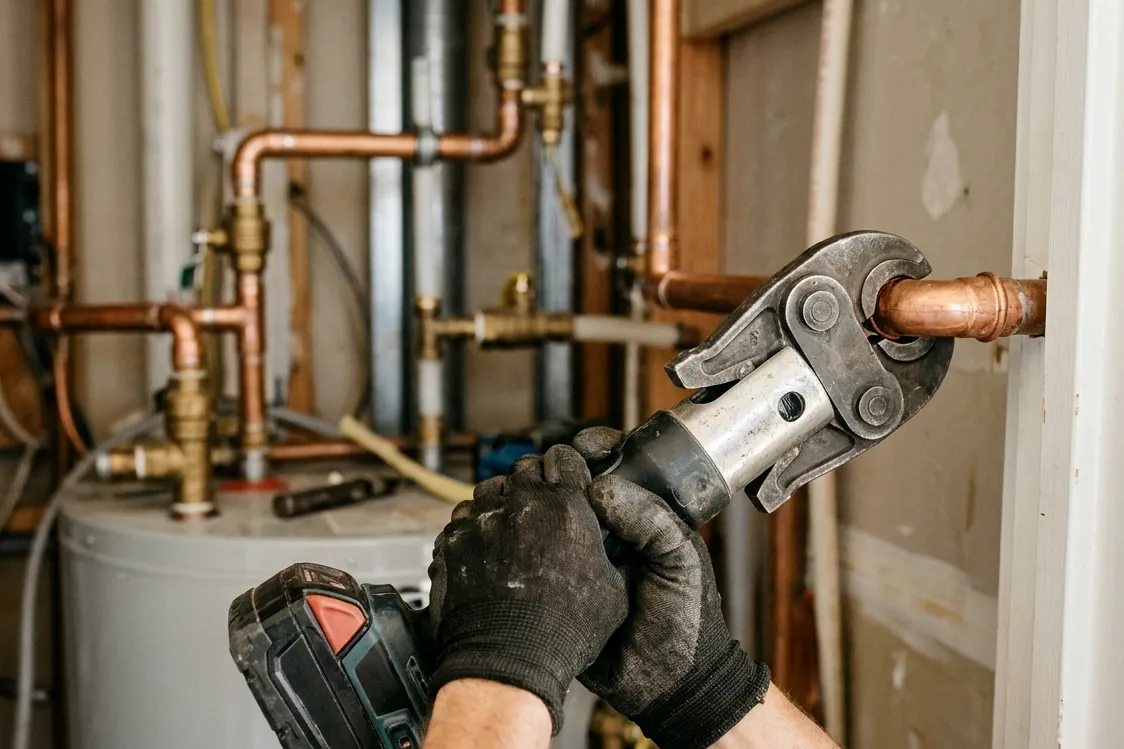
When the device passes, we send the results to the City of Raleigh or the utility serving your address, and you get a copy for your records. When it fails, the most common causes are debris on a check seat, a worn rubber disc or a tired spring. We carry rebuild kits for common brands and retest after the repair. If the body is cracked or the device is obsolete, we explain replacing the assembly.
How the job goes
Locate the assembly
We find the device, clear the enclosure, and confirm its type, brand, size and serial number match the utility's record.
Isolate and connect
Irrigation is shut down, the shutoff valves are closed in order, and the test kit hoses are connected to each test cock.
Run the test
Each check valve and relief or air inlet is tested in sequence, and every reading is written down against its pass value.
Repair if failed
A failed check or relief valve is cleaned or rebuilt with the correct kit, and then the full test is run again from the start.
Report results
Passing results are sent to the water utility, and you receive a copy showing the date, readings and device details.
Backflow requirements around the Triangle
Raleigh's cross-connection control program covers city customers plus the towns whose water systems merged with Raleigh's, including Garner, Knightdale, Rolesville, Wake Forest, Wendell and Zebulon. Irrigation systems are the most common assembly at homes, and they are especially common in newer neighborhoods like Wakefield, Brier Creek and Falls River, where many lots were built with in-ground sprinklers. Our article on the backflow testing schedule covers timing and notices in more detail.
Cary, Durham and other utilities run their own backflow programs with their own reporting, so the paperwork goes to whoever supplies your water. Winter is the other local factor. Hard freezes in the Triangle are occasional rather than constant, which is exactly why they catch people off guard. An assembly left full of water in an uninsulated box can crack overnight, so we recommend draining or insulating it before the first deep cold.
What a backflow test costs
| Job | Typical range |
|---|---|
| Residential irrigation test, one assembly | $67 to $118 |
| Each additional assembly, same visit | $43 to $76 |
| Check valve rebuild and retest | $137 to $262 |
| RPZ relief valve rebuild and retest | $168 to $317 |
| Commercial assembly test, 2 inch and under | $94 to $173 |
Device type and size, access to the enclosure, and whether shutoffs or internal parts need work set the final price. A plumber confirms it with you before any repair begins. See every range in our plumbing cost guide.
Questions about backflow testing
How often does Raleigh require backflow testing?
Testable assemblies covered by the City of Raleigh's cross-connection program have to be tested once a year, and the city sends reminders based on the date on file. If you miss the deadline, the city follows up with notices and, in some cases, can restrict service to that connection. Testing a few weeks before the due date leaves time for repairs if the device fails.
What happens if my backflow preventer fails the test?
A failure means one of the internal parts is not holding pressure the way it should. The fix is usually cleaning debris off a check seat or rebuilding the check or relief valve with a kit, then retesting. Most repairs happen the same day. Only a cracked body, a discontinued model or a device that keeps failing points toward full replacement.
Do I need to be home for the backflow test?
Not always. If the assembly is outside and reachable, and the irrigation controller can be turned off or is already off for winter, we can test without you there. We need the enclosure accessible, pets secured and gates open. If the device is inside a garage or basement, someone has to let us in. We will tell you the result either way.
Can you test my backflow device in winter?
Yes, as long as the assembly has water and the temperature allows the test without freezing the device. Many irrigation assemblies are drained for winter, so we may need to put water back on briefly and then drain it again afterward. If your due date falls in January, give us a call at (919) 557-9058 and we will pick a mild day.
Related
Related plumbing services
Backflow Preventer Installation
Your backflow assembly failed its test and cannot be rebuilt, or you are adding irrigation and the water utility says a...
Learn moreOutdoor Faucet Repair
The outside spigot drips nonstop, sprays from the handle when the hose is on, or leaks into the crawl space after the...
Learn moreCommercial Plumbing
A restroom is out of service, the grease interceptor is backing up into the kitchen, or a tenant is calling about a...
Learn morePressure Reducing Valve Replacement
Faucets bang shut, the toilet fill valve hisses, the water heater relief valve keeps dripping, and a gauge on the hose...
Learn morePlumbing problem right now?
Call and a person answers, day or night. A plumber from our downtown Raleigh office comes to you.