Emergency and leaks
Frozen pipe thawing and repair after a Raleigh cold snap
It is a cold morning, a faucet gives a trickle or nothing at all, and you are worried the frozen pipe will split once it starts to thaw.
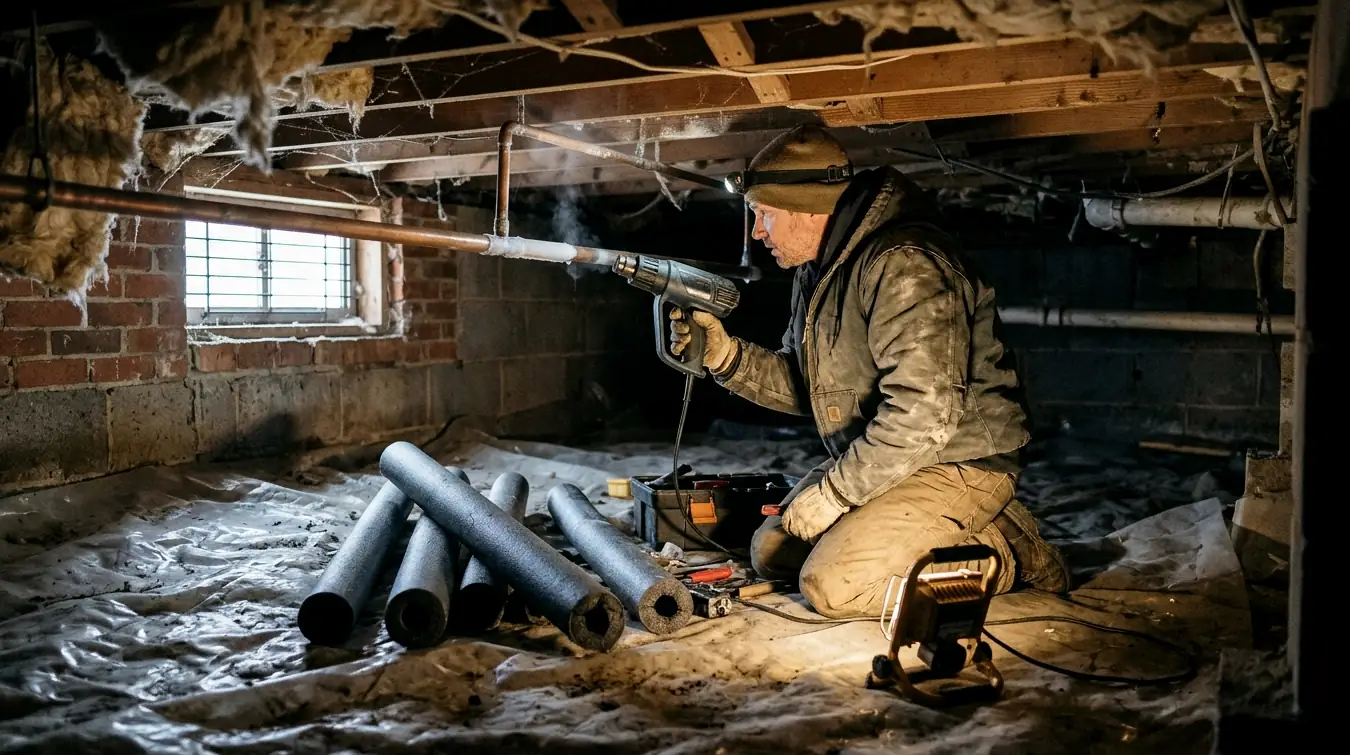
First step on arrival: find the frozen spot
A frozen pipe is a race between the thaw and the damage. Ice expands inside the line and builds pressure, and a crack can form that will not leak until the ice melts. Serenity Plumbing thaws frozen lines with controlled heat, never an open flame against the pipe, and checks the line for splits before the water is fully back on. If we find a crack, it gets repaired on the same visit.
If you suspect a frozen pipe, open the faucet it feeds so melting water has somewhere to go, and find your main shut-off in case a split appears. Keep space heaters away from anything that can burn, and do not use a torch. If water starts spraying when the line thaws, close the main valve and read our burst pipe repair page, or simply call (919) 557-9058 and we will walk you through it.
How to tell a pipe has frozen
Faucet barely flowing
One fixture slows to a trickle or stops completely on a cold morning while the rest of the house still has water.
Frost on the pipe
Exposed pipe in a crawl space, garage or attic shows visible frost or feels ice cold and solid to the touch.
Toilet will not refill
A toilet tank that stays empty after a flush on a freezing morning often means its supply line froze along an outside wall.
Washer or ice maker fails
The washing machine or refrigerator ice maker stops getting water while sinks still run, pointing to a frozen branch in a cold wall.
Bulge in the line
A visible swelling in copper or PEX, or a cracked fitting, means ice has already stretched the pipe and a leak is likely.
Sputtering as it warms
Gurgling or sputtering at a faucet as the day warms usually means ice is breaking up and air is moving through the line.
How we thaw and repair frozen lines
The plumber first finds the frozen section by checking which fixtures have water and following the line back into the crawl space, wall or attic. Frozen spots are usually where a pipe passes close to a vent, an outside wall or a gap in insulation. Knowing the exact location matters, because heat applied in the wrong place wastes time, and heat applied too fast can damage fittings and PEX.
We thaw the line with heat guns, heat tape or pipe thawing equipment, working from the faucet end back toward the ice so melting water can drain out. The main valve stays ready to close in case the line has already split. As flow returns, the plumber watches and listens along the run for hissing or dripping, then checks the fittings on each side of the frozen section for hairline cracks.
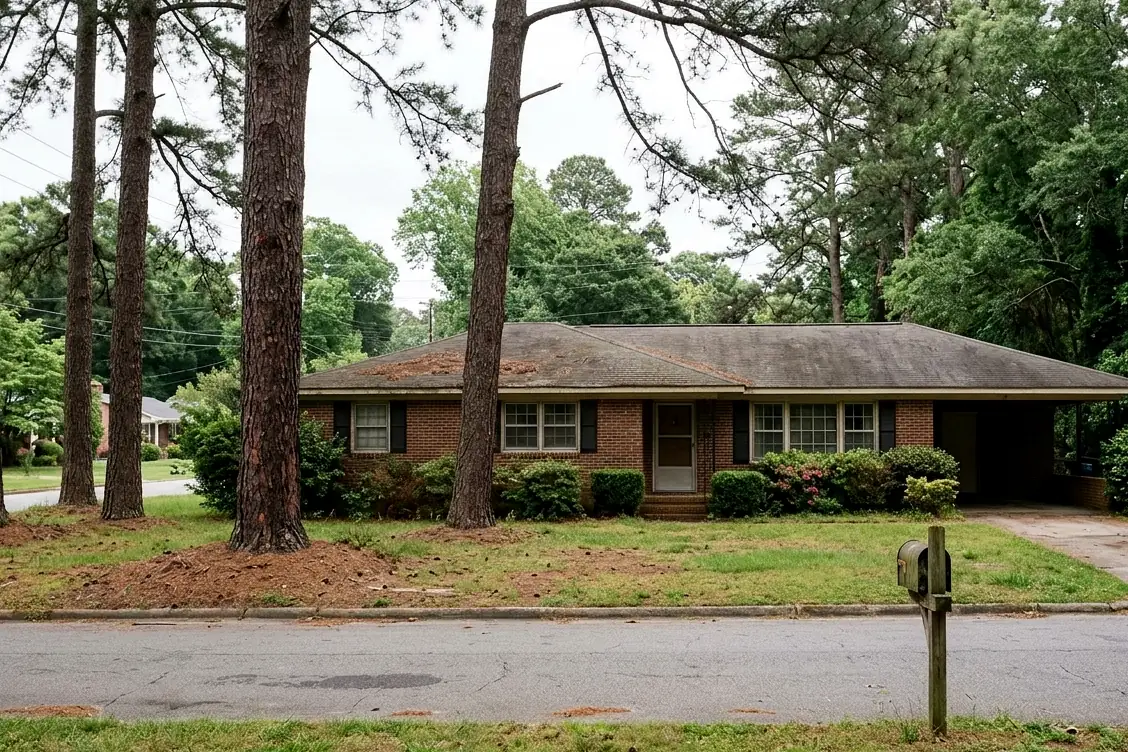
If the pipe split, the damaged section is cut out and replaced the same day. Then comes the part that prevents a repeat: insulating the exposed run, sealing gaps around vents and penetrations, or rerouting a line away from an outside wall. For a hose bib that freezes every winter, a frost-free sillcock is the usual fix, and our plumber can handle that outdoor faucet repair on the same trip.
How the job goes
Find the frozen spot
We test fixtures and trace the line to the section most exposed to cold air, usually in a crawl space, wall or attic.
Prepare for a split
The main valve is located and ready, and the affected faucet is opened so melting water has a path out of the line.
Thaw with controlled heat
Heat guns, heat tape or thawing equipment warm the line gradually from the faucet end, with no open flame on the pipe.
Check for cracks
As flow returns, the plumber inspects the thawed section and nearby fittings for leaks and replaces any pipe that split.
Protect the run
The pipe is insulated, drafts are sealed or the line is rerouted so the same section does not freeze during the next cold snap.
Why Raleigh pipes freeze when it does get cold
Raleigh's winters are mild most of the time, which is exactly why a hard freeze causes trouble. Many homes were built with pipes in vented crawl spaces, on exterior walls or in unheated garages, and that works fine until a night drops into the teens with wind behind it. When that happens, calls come in from across Wake County, often from the same few spots in each house.
Older homes in neighborhoods like Glenwood-Brooklyn and Cameron Park may have little or no pipe insulation and drafty crawl spaces. Newer homes are not immune, especially where a line runs through an attic over a bonus room or along a garage wall. Rural homes in Franklin and Granville counties with well systems can also freeze at the pressure tank, which leaves the whole house without water.
What frozen pipe repair typically costs
| Job | Typical range |
|---|---|
| Locate and thaw a frozen line | $167 to $348 |
| Thaw plus repair of a split section | $284 to $612 |
| Frost-free hose bib installed | $213 to $437 |
| Reroute a line off an exterior wall | $486 to $1,138 |
How hard the frozen section is to reach and whether the pipe split decide most of the cost. Overnight and holiday calls during a freeze can carry a higher service call. See every range in our plumbing cost guide.
Questions about frozen pipe repair
Can I thaw a frozen pipe myself?
For an exposed pipe you can reach, a hair dryer or a space heater kept at a safe distance can work. Open the faucet first and warm the pipe starting near the faucet. Never use a torch or open flame. If you cannot find the frozen spot or it is inside a wall, call a plumber rather than heating the wrong area.
Should I leave faucets dripping on freezing nights?
Yes, on the coldest nights it helps, especially for faucets on exterior walls. Moving water is harder to freeze, and an open faucet relieves the pressure that builds when ice forms. A thin, steady drip from both hot and cold is enough. Open the cabinet doors under those sinks too, so warm room air can reach the pipes.
Will a frozen pipe always burst?
No. Many frozen pipes thaw without damage, particularly PEX, which can stretch a little. Copper and older galvanized pipe are more likely to split. The risk climbs with how hard and how long the pipe froze. That is why a plumber checks the line under pressure after thawing rather than assuming it is fine because water is flowing again.
Why does the same pipe in my house freeze every winter?
That section is almost always sitting in cold moving air: near a crawl space vent, against an uninsulated outside wall or in a garage or attic. Insulation alone may not be enough if a draft is blowing on it. Sealing the gap, adding insulation and, when needed, rerouting the pipe into heated space is the lasting fix.
Related
Related plumbing services
Burst Pipe Repair
A pipe has split, water is spraying or pouring into the house, and you need it stopped and repaired before the floors...
Learn moreCrawl Space Plumbing Repair
Something under the house is leaking, dripping or smelling wrong, and getting into a tight, damp crawl space to deal...
Learn moreOutdoor Faucet Repair
The outside spigot drips nonstop, sprays from the handle when the hose is on, or leaks into the crawl space after the...
Learn morePlumbing problem right now?
Call and a person answers, day or night. A plumber from our downtown Raleigh office comes to you.