Water heaters
Replacing leaking and worn-out water heaters across Raleigh
Water is seeping from the bottom of the tank, or the heater is old enough that another repair no longer makes sense, and you need a new one in.
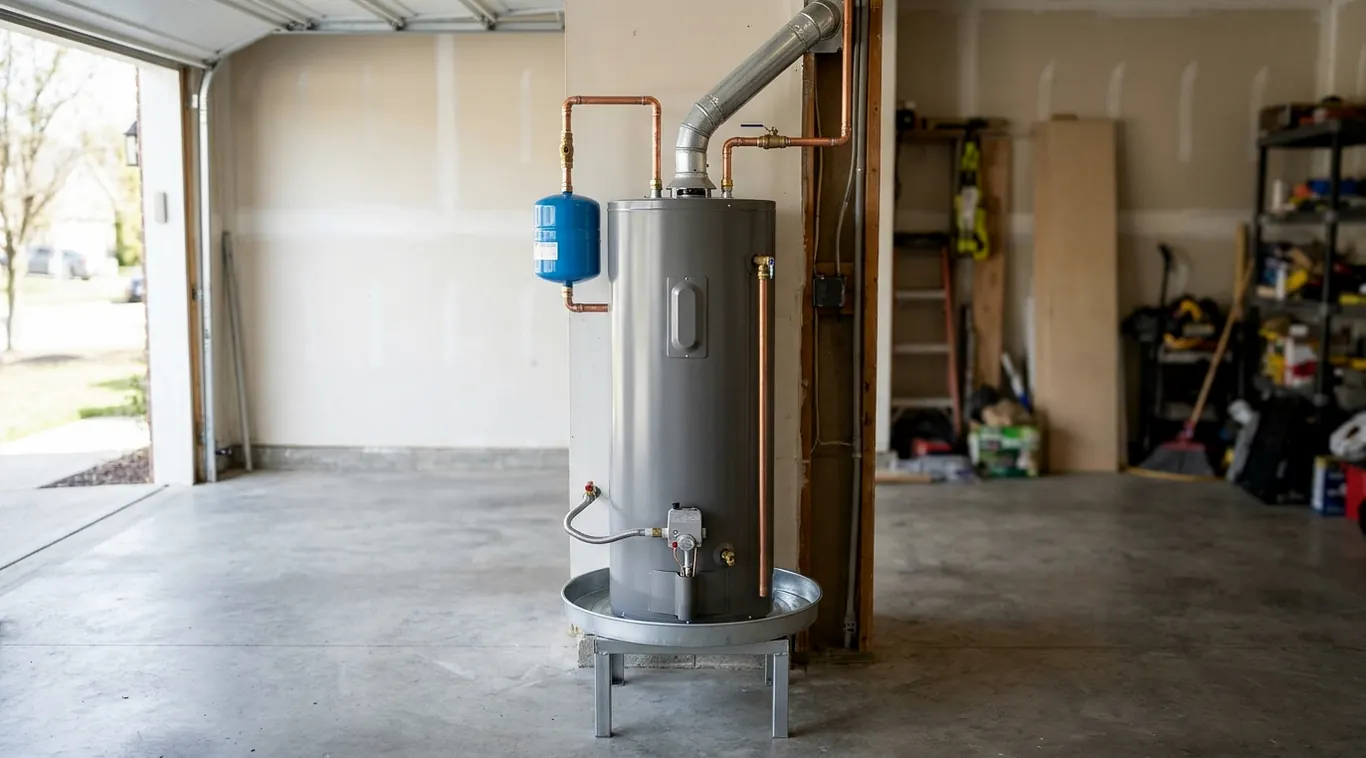
First step on arrival: size and select
A leaking tank cannot be repaired. Once water is coming from the shell itself, the steel lining has corroded through, and the only fix is a new heater. Serenity Plumbing replaces gas and electric tank water heaters across Raleigh and the Triangle, usually the same day or the next, with our own plumbers doing the removal, installation and cleanup. We haul the old tank away when we leave.
Replacement is also a chance to fix what the old install got wrong. We bring the venting, gas connection, relief valve discharge and drain pan up to current code, and add an expansion tank where the plumbing calls for one. If you have been weighing a different kind of heater, we can talk through a tankless installation as well. Our article on when to replace a water heater covers the warning signs in more detail.
Signs it is time for a new water heater
Leak from the tank body
Water seeping from the shell or pooling under the base, not from a fitting, means the tank has corroded through.
Rust at the seams
Rust streaks around the top fittings or the base, or rusty water from the hot side only, point to internal corrosion.
Age past ten years
Most tank heaters in the Triangle last roughly eight to twelve years, and failure risk rises steadily after that.
Repeated repairs
A second or third repair in a short span suggests the tank is wearing out as a whole, not just one part.
Not enough hot water
The household has grown, or a new soaking tub was added, and the current tank cannot keep up anymore.
Loud, sediment-heavy tank
Constant rumbling that a flush no longer fixes means sediment has hardened, cutting capacity and stressing the tank bottom.
How a Serenity water heater replacement goes
We size the new heater before we quote it. That means looking at the number of bathrooms, people in the house, whether there is a large tub, and the fuel available. For gas units, we check the venting type and the gas line; for electric units, we confirm the circuit and breaker can carry the new heater. A tank that is too small leaves you short, and one that is too large wastes energy keeping water hot.
On install day, we shut off water and fuel, drain and disconnect the old tank, and set the new heater in place on a drain pan where the location calls for one. New supply connections, a fresh relief valve with its discharge pipe run to an approved spot, and proper vent connections go in. Gas joints are leak tested. Where a check valve or pressure reducing valve has closed the system, we add a thermal expansion tank.
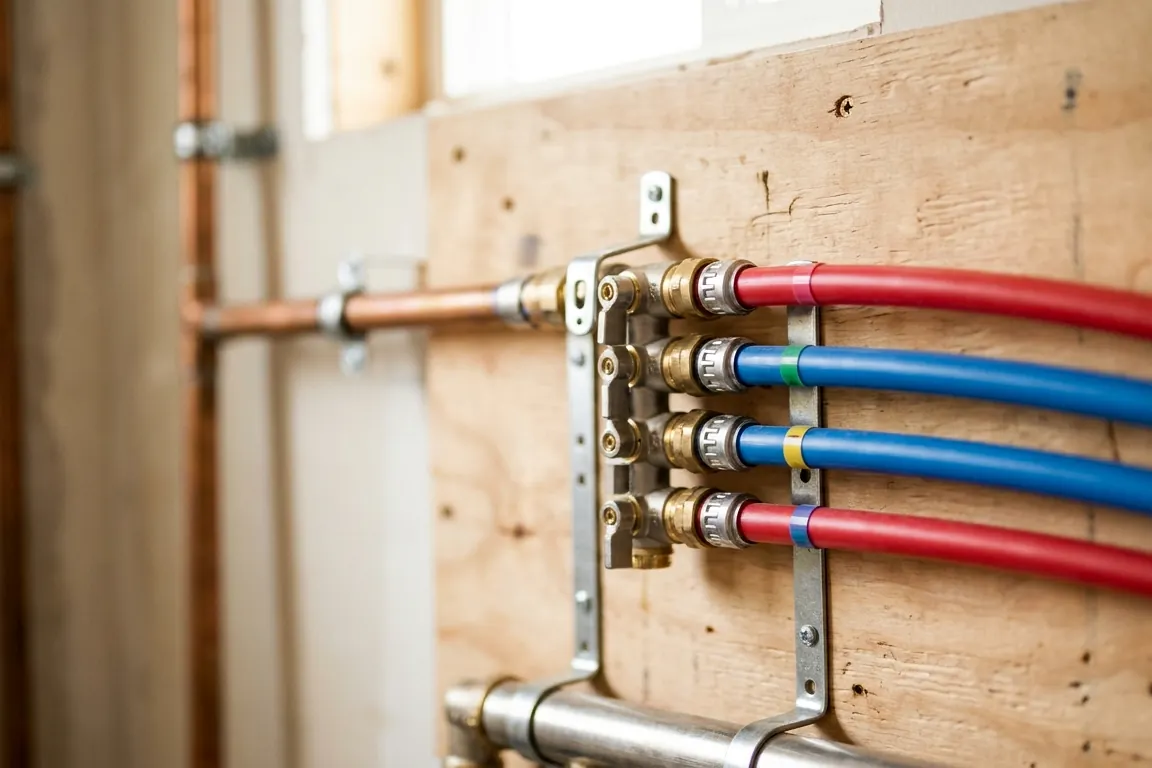
In North Carolina, water heater replacements generally require a permit and inspection, and Serenity pulls it as part of the job. Our article on water heater permits in Raleigh explains why that matters for safety and for selling a home later. If your tank is leaking right now, call (919) 557-9058; we answer 24/7 and can shut it down safely before replacement.
How the job goes
Size and select
We look at household size, fixtures, fuel type and space to choose the right capacity and model before quoting.
Permit the job
Serenity files the required permit with the right local office so the new heater is inspected after it goes in.
Remove the old tank
Water and fuel are shut off, the old heater is drained and disconnected, and it is carried out with care.
Install to code
The new heater gets proper venting, gas or electric connections, a new relief valve and discharge pipe, and a pan where required.
Start and haul away
We fill the tank, light or power it, check temperature at a faucet, and take the old unit with us.
Where Raleigh homes keep their water heaters
Location changes the job. In older neighborhoods like Cameron Park and Five Points, tanks often sit in a crawl space, a cramped closet or a converted porch, which can limit tank size and make the carry-out slow. Some older gas installs have venting that no longer meets current rules and needs to be corrected during replacement. We look at access and venting on the first visit so the quote is accurate.
In newer homes across Cary, Holly Springs and Wake Forest, many heaters are in a garage, where gas units may need to be raised off the floor, or in the attic, where a drain pan with a line to the outside is essential. In rural parts of Johnston and Harnett counties, homes on propane or private wells sometimes need extra checks on the fuel line and water quality before a new tank goes in.
Typical water heater replacement costs
| Job | Typical range |
|---|---|
| 40 or 50 gallon electric tank, installed | $1,387 to $2,264 |
| 40 or 50 gallon gas tank, installed | $1,643 to $2,718 |
| Attic or tight crawl space installation | $318 to $767 added |
| Thermal expansion tank | $187 to $346 |
| Venting or gas line corrections | $243 to $689 |
| Permit, inspection and haul-away | $118 to $263 |
Tank size, fuel type, location and the code updates the old install needs move the total most. A plumber confirms your price after seeing the existing heater. See every range in our plumbing cost guide.
Questions about water heater replacement
How fast can you replace a water heater once it starts leaking?
In many cases the same day, and otherwise the next day, depending on the size and type you need. Common 40 and 50 gallon gas and electric tanks are easy to source. Until then, we can shut off water to the tank and turn off its fuel or power so the leak stops and the rest of the house still has cold water.
Should I replace my old tank with the same size?
Not always. If the old tank ran out of hot water often, a larger tank or a higher recovery model may suit you better. If the house now has fewer people, a smaller unit may be enough. We ask a few questions about how you use hot water and check the space before suggesting a size.
Why does a new water heater need an expansion tank?
When water heats, it expands. If your home has a pressure reducing valve or a check valve at the meter, that extra volume has nowhere to go, and pressure spikes each time the heater runs. That strains the tank and can make the relief valve drip. A small expansion tank absorbs that volume and protects the new heater.
Can I switch from an electric water heater to gas?
Often, if natural gas or propane is available at the house. The switch means running a gas line to the heater location, adding proper venting, and confirming combustion air. It costs more up front than a like-for-like swap. We look at the gas service, the route and venting options and give you the full picture before you decide.
Related
Related plumbing services
Water Heater Repair
The shower ran cold this morning, the tank is making popping noises, or there is a puddle forming around the base of...
Learn moreTankless Water Heater Installation
You want endless hot water and a freed-up closet or garage corner, but you are not sure your gas line, venting and...
Learn moreGas Line Installation
You picked out a gas range, a tankless heater or an outdoor grill, and now there is no gas line where the new appliance...
Learn morePressure Reducing Valve Replacement
Faucets bang shut, the toilet fill valve hisses, the water heater relief valve keeps dripping, and a gauge on the hose...
Learn morePlumbing problem right now?
Call and a person answers, day or night. A plumber from our downtown Raleigh office comes to you.