Service area
Raleigh plumbing repair from our Fayetteville Street office
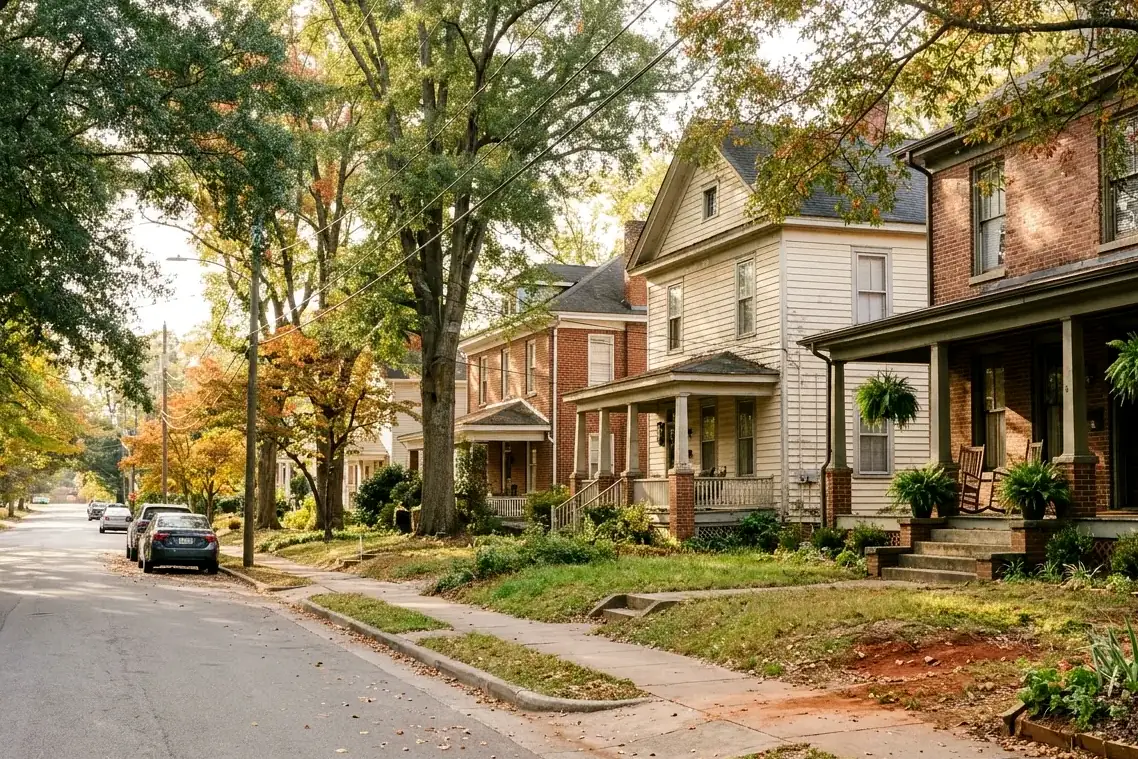
Raleigh homes run from Victorian houses near the Capitol to 2000s subdivisions off I-540, and each era comes with its own pipes, drains and weak spots.
- Area
- Raleigh, NC
- ZIP codes
- 27601, 27603, 27604, 27605, 27606, 27608
- County
- Wake County
- Office
- 301 Fayetteville St, Raleigh
- Phones
- Answered 24/7
Serenity Plumbing works out of an office at 301 Fayetteville Street downtown, so our own plumbers reach most Raleigh addresses without crossing half the Triangle first. We answer 24/7, including holidays, and the calls on a typical day range from a dripping supply line under a Mordecai sink to a sewer backup in a Southeast Raleigh ranch house. Most visits start with finding the actual cause, then giving you a price before any work begins.
The city spreads well past the Beltline now. Inside I-440, older houses sit on brick piers over crawl spaces, with cast iron drains and clay sewer laterals that tree roots find sooner or later, which is why a camera check of the lateral is so often our first step there. Out toward Brier Creek, Wakefield and Falls River, homes built in the late 1990s and 2000s tend to have CPVC or PEX supply lines and water heaters tucked in garages or attics.
How Raleigh houses were built, and what that means for the pipes
Neighborhoods like Oakwood, Boylan Heights and Mordecai hold some of the oldest housing in the city, and many of those houses have been replumbed in pieces over the decades. It is normal to open a crawl space and find galvanized steel, copper and PEX all feeding the same bathroom. Galvanized pipe corrodes from the inside, so weak flow at one fixture usually points to a clogged run rather than a city problem. Cast iron drains in these houses tend to crack along the bottom, where water sits.
The ranch houses and split-levels built across North Raleigh and around the Beltline after World War II brought copper supply lines and, later, plastic drains. Homes built from the late 1970s to the mid 1990s, which covers much of Stonehenge, Hedingham and other suburbs of that period, may still carry gray polybutylene pipe that fails at fittings without warning. If you are unsure what you have, our page on polybutylene in Raleigh homes shows what to look for near the water heater.
Almost the whole city gets water and sewer from City of Raleigh Public Utilities, which draws mainly from Falls Lake. The red clay under Raleigh holds water after summer storms and shrinks as it dries, which stresses old laterals and lets willow oak and maple roots work into joints. Hard freezes are rare but real, and when one arrives, pipes in vented crawl spaces and on north walls split first. The city also requires yearly testing of irrigation backflow assemblies.
Common calls
What we get called for in Raleigh
Sewer backups inside the Beltline
Clay and cast iron laterals under older streets collect roots from mature oaks, and backups often appear first at a tub, floor drain or crawl space cleanout.
Main Line Clog ClearingWater heater failures
Many Raleigh tanks sit in garages, closets or attics, and a slow leak from a worn tank or relief valve can soak a ceiling before anyone notices.
Water Heater ReplacementCrawl space leaks
Supply lines and drains under pier-and-beam houses leak out of sight, so damp insulation or a musty odor is usually the first clue.
Crawl Space Plumbing RepairPolybutylene fitting breaks
Houses built between the late 1970s and mid 1990s can still have gray PB pipe, which tends to let go at crimp fittings with no warning.
Polybutylene Pipe ReplacementHigh water pressure
Some Raleigh addresses see street pressure above 80 psi, which wears out toilet fill valves, washer hoses and water heater relief valves early.
Pressure Reducing Valve ReplacementClogged kitchen drains
Grease, rice and coffee grounds settle in older, flatter drain runs, and a kitchen line that drains slowly usually gets worse during holiday cooking.
Drain Cleaning
Neighborhoods
Raleigh neighborhoods we cover
Downtown Raleigh
Our office is on Fayetteville Street, so downtown calls about condo leaks, stubborn drains and closet water heaters are...
Oakwood
Oakwood's Victorian and early 1900s houses sit high on masonry foundations above dirt crawl spaces, with old sewer...
Mordecai
Mordecai's bungalows and foursquares near the old Mordecai House usually carry a mix of original and patched plumbing...
Five Points
Around the Five Points intersection, 1920s to 1940s homes with basements and crawl spaces sit beside large rebuilds, so...
Hayes Barton
Hayes Barton's large 1920s and 1930s houses on curving, tree-covered streets come with long sewer laterals, older drain...
Boylan Heights
Boylan Heights sits on a hill southwest of downtown, where early 1900s houses with crawl spaces and steep yards make...
Cameron Park
Cameron Park's early twentieth century homes line shaded streets and small wooded ravines near Hillsborough Street...
Glenwood-Brooklyn
Glenwood-Brooklyn packs modest early 1900s cottages and bungalows onto narrow lots between Glenwood Avenue and Saint...
North Hills
North Hills mixes newer midrise condos around Six Forks Road with 1960s ranch houses on the surrounding streets, two...
Brier Creek
Brier Creek's townhomes and single-family homes near RDU and I-540 are mostly from the 2000s, so attic water heaters...
Wakefield
Wakefield's large late 1990s and 2000s homes north of I-540 have more bathrooms, bigger water heaters and longer pipe...
Stonehenge
Stonehenge homes off Creedmoor Road date largely from the 1970s and 1980s, which puts many of them squarely in the...
Falls River
Falls River's planned neighborhoods off Durant Road hold single-family homes, townhomes and condos from the late 1990s...
Hedingham
Hedingham's golf course houses and townhome rows in east Raleigh largely date to the peak years for polybutylene supply...
Lake Johnson
Around Lake Johnson in southwest Raleigh, 1960s and 1970s ranch houses sit near condos and apartments full of NC State...
Southeast Raleigh
Southeast Raleigh runs from historic blocks near Chavis Park out to newer subdivisions past I-40, so a single day here...
Brentwood
Brentwood's brick ranches and split-levels off Capital Boulevard are old enough that the copper, cast iron and sewer...
Six Forks
The neighborhoods along Six Forks Road were built over several decades, so one street may have original copper while...
Crabtree Valley
Around Crabtree Valley, condos and apartments on the low ground near Crabtree Creek sit just below older houses on the...
University Park
University Park's early twentieth century cottages and bungalows near NC State carry old water services and clay...
Laurel Hills
Laurel Hills in west Raleigh has mid-century ranches and split-levels on hilly, tree-covered lots between Lake Boone...
FAQ
Plumbing questions from Raleigh
How fast can a Serenity plumber reach a Raleigh address at night?
Our plumbers start from downtown, so most addresses inside the Beltline and along the main corridors are a short drive at night, when traffic is light. Calls from Brier Creek, Wakefield or the far southeast take a little longer. We answer 24/7 at (919) 557-9058 and give you an honest arrival window on the phone instead of a vague promise.
Do I need a permit to replace a water heater inside Raleigh city limits?
Generally yes. North Carolina treats a water heater replacement as permitted work, and inside Raleigh the permit and inspection run through the city. The inspector looks at the relief valve and its discharge line, the venting on gas units, and the expansion tank where one is needed. Our article on the Raleigh water heater permit walks through what to expect.
What does a typical drain or leak repair cost in Raleigh?
A routine sink or tub drain clearing in Raleigh usually runs $137 to $289. Fixing a single leaking supply line in a crawl space often lands between $193 and $468, depending on access and pipe material. Main sewer line clearing with a camera check is typically $287 to $612. The real price comes after a plumber sees the job, and you hear it before work starts.
Who handles a leak on the street side of my Raleigh water meter?
Generally, City of Raleigh Public Utilities is responsible for the meter and the pipe on the street side of it, so a leak at the meter box or under the sidewalk is theirs to fix. The line from the meter to your house belongs to the owner. If you cannot tell which side the water is coming from, we can find out and tell you plainly.
Nearby areas
Need a plumber in Raleigh?
Call and a person answers, day or night. A plumber from our downtown Raleigh office comes to you.