Water heaters
Hot water in seconds at far sinks and showers in Raleigh homes
You run the shower or the kitchen tap for a minute or more, watching clean water go down the drain, before hot water finally reaches the faucet.
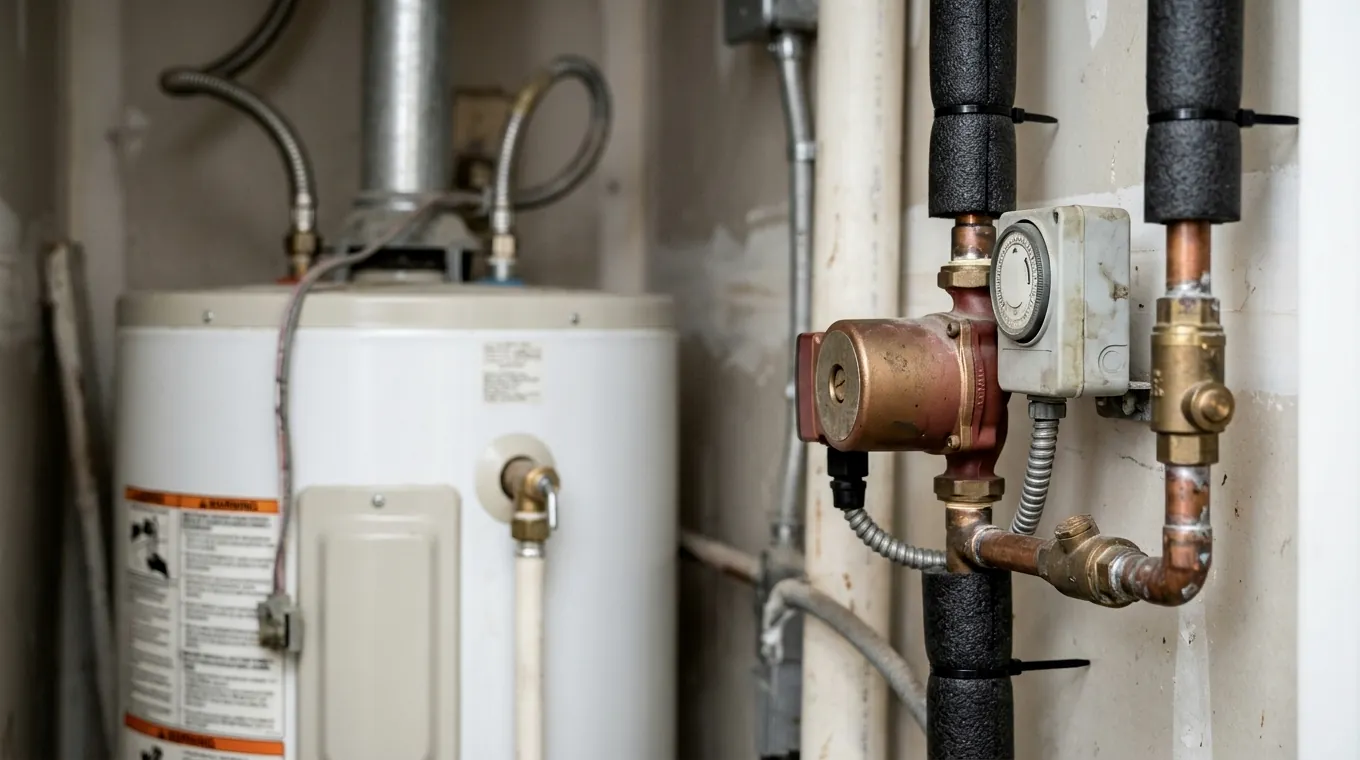
First step on arrival: time each fixture
The wait for hot water is a distance problem. When a water heater sits in the garage at one end of the house and the main bathroom is at the other, the water sitting in that long pipe cools between uses and has to be flushed out before hot water arrives. A recirculation pump keeps warm water moving through the hot line, so it is already close to the fixture when you open the tap.
Serenity Plumbing installs two main types. A dedicated return-line system uses a separate pipe from the far fixture back to the heater and is the most effective option, best done during new construction or a repipe. A comfort system uses the existing cold line as the return through a crossover valve under the farthest sink, so no new pipe is needed. Both can run on a timer, a push button or a motion sensor.
Signs a recirculation pump would help
Long wait for hot water
It takes more than thirty seconds or so for hot water to reach a shower, tub or kitchen sink.
Heater far from baths
The water heater is in a garage, basement or attic at the opposite end of the house from the main bathrooms.
Large or two-story home
A sprawling ranch or a two-story layout means long hot water runs to bathrooms on the far side or upstairs.
Running water to waste
Your household runs taps for minutes every morning, and the water bill shows the cost of that waiting.
Tankless already installed
A tankless unit adds its own firing delay, and a compatible model with built-in recirculation can shorten the wait.
Repipe or remodel planned
Walls are opening for other work, making it the right time to add a dedicated return line back to the heater.
How Serenity sets up a recirculation system
We start by timing the wait at each fixture and tracing the hot line from the heater. That shows whether one far fixture or a whole wing of the house is the problem, and whether a return line can be routed through an attic, crawl space or open wall. In many Raleigh homes with crawl spaces, a dedicated return line is easier to add than people expect, because the pipes are accessible from underneath.
For a dedicated system, we run an insulated return pipe from the end of the hot line back to the heater's drain or a return port, then mount the pump with check valves and isolation valves. For a comfort system, the pump mounts at the heater and a thermostatic crossover valve goes under the farthest sink, sending cooled water back through the cold line until hot water arrives. Tankless homes need a compatible unit or a small buffer tank.

Control matters as much as the pump. A pump running all day wastes energy and keeps heat in the walls during summer. We set yours to run on a timer around morning and evening routines, or on demand with a button or motion sensor in the bathroom. We insulate exposed hot and return lines so the warm water stays warm. To ask about your home's layout, call (919) 557-9058.
How the job goes
Time each fixture
We measure how long hot water takes at every sink and shower and trace the hot line route from the heater.
Choose a system
Based on access and layout, we recommend a dedicated return line or a crossover comfort system and explain the difference.
Run the return
For dedicated systems, we route an insulated return pipe from the farthest fixture back to the heater through attic or crawl space.
Mount pump and valves
The pump, check valves and isolation valves go in at the heater, with a crossover valve under a sink for comfort systems.
Set the controls
We program a timer or install a push button or motion sensor, then retime each fixture to confirm the shorter wait.
Long hot water runs in Triangle house layouts
Many homes built around the Triangle in recent decades, including large two-story houses in Wakefield, Cary and Morrisville, put the water heater in the garage or attic and the main bathroom on the far side of the second floor. That can add up to a long run of pipe, and it shows up as a long wait each morning. Long brick ranches in older parts of north Raleigh have the same issue, just spread horizontally.
Crawl space construction is common in Raleigh and helps with retrofits, since a return line can often be routed under the floor without opening walls. In slab homes, a comfort system with a crossover valve is usually the practical route. In winter, cold crawl spaces also cool uninsulated hot lines faster, so pipe insulation matters here as part of the job, not as an extra.
Recirculation pump costs in the Raleigh area
| Job | Typical range |
|---|---|
| Comfort system with crossover valve, no new pipe | $587 to $1,138 |
| Dedicated return line, crawl space or attic access | $1,264 to $2,687 |
| Timer, push button or motion sensor control | $94 to $287 |
| Pipe insulation for hot and return lines | $163 to $419 |
| Buffer tank or compatible setup for tankless | $437 to $968 |
House layout, access to the hot line, and whether a return pipe has to be added drive the price. Your plumber confirms the actual cost after timing and tracing the system. See every range in our plumbing cost guide.
Questions about hot water recirculation pump
Does a recirculation pump really save water, or does it just cost electricity?
It saves the water you would otherwise run down the drain while waiting, which adds up in a busy household. It does use some electricity and keeps a bit of heat moving through the pipes. Running the pump on a timer or on demand, with insulated lines, keeps the energy use small while still cutting the wait.
Can I add a recirculation pump if I have no return line?
Yes. A comfort system uses your existing cold water line as the return. A crossover valve under the farthest sink lets cooled hot water flow into the cold line until it warms up, then closes. The tradeoff is that the cold tap at that sink can run slightly warm at first. It needs no new pipe.
Will a recirculation pump work with my tankless water heater?
It can, but not every tankless unit is built for it. Some models have a built-in pump and recirculation setting, and others need an external pump and a small buffer tank so the heater is not firing on and off constantly. We check your model and its settings before recommending a setup.
How long does it take to install a recirculation system?
A comfort system with a crossover valve usually takes a few hours. A dedicated return line can take a day or more, depending on how far the pipe runs and how easy the attic or crawl space is to work in. We give you a time estimate when we time your fixtures and trace the hot line.
Related
Related plumbing services
Tankless Water Heater Installation
You want endless hot water and a freed-up closet or garage corner, but you are not sure your gas line, venting and...
Learn moreWater Heater Replacement
Water is seeping from the bottom of the tank, or the heater is old enough that another repair no longer makes sense...
Learn moreWhole-House Repiping
Leaks keep popping up in different places, the water runs rusty or weak, or an inspector flagged the old supply pipes...
Learn morePlumbing problem right now?
Call and a person answers, day or night. A plumber from our downtown Raleigh office comes to you.