Backflow and water quality
Installing and replacing backflow preventers across Raleigh
Your backflow assembly failed its test and cannot be rebuilt, or you are adding irrigation and the water utility says a new testable device is required.
First step on arrival: confirm the requirement
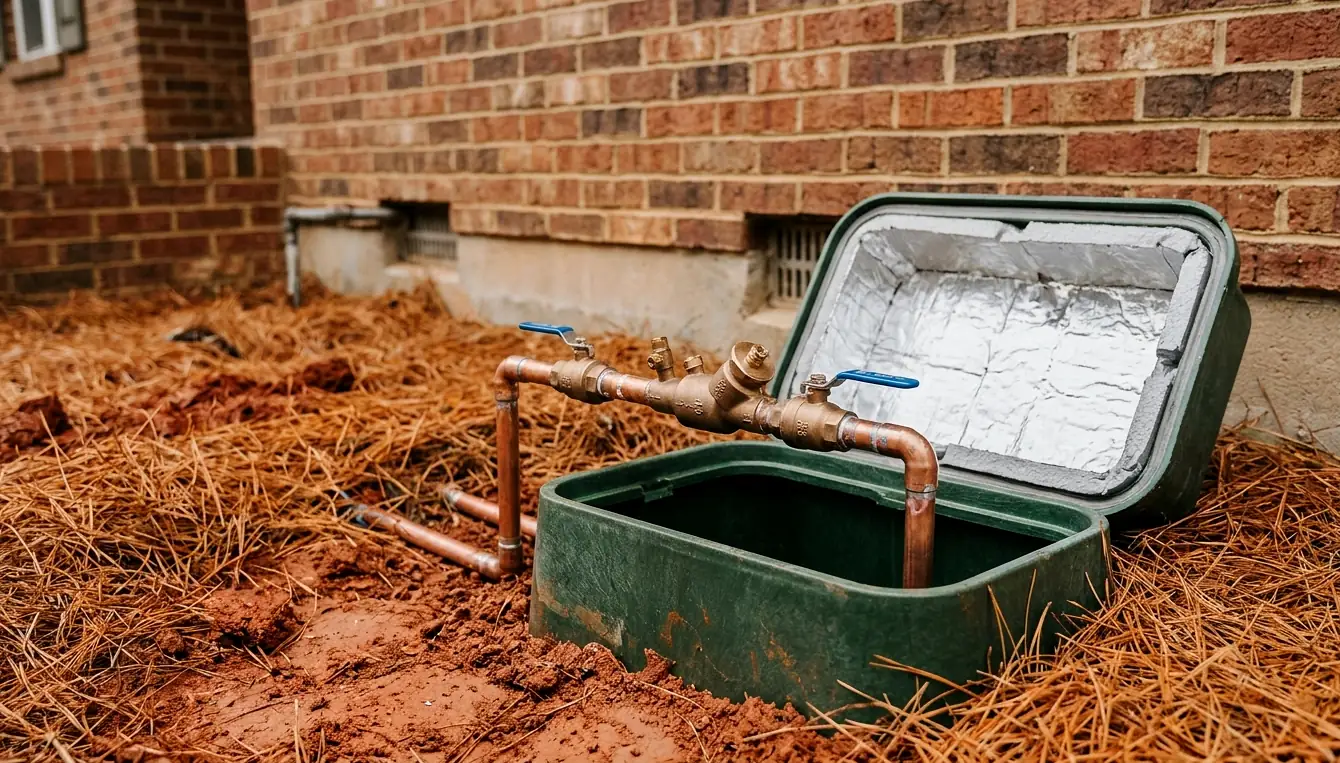
A backflow preventer is a valve assembly that stops water from flowing backward out of your property and into the public supply. The right device depends on the hazard. A residential lawn sprinkler often uses a pressure vacuum breaker or a double check valve assembly. An irrigation system that injects fertilizer, a boiler with chemical treatment, or a medical or restaurant connection usually calls for a reduced pressure zone assembly, commonly called an RPZ.
Serenity Plumbing installs and replaces backflow preventers for homes, property managers and businesses around Raleigh and the Triangle, using its own plumbers. We confirm which device type your water utility requires for the connection, install it at the correct height and orientation with room for testing, run the initial test, and send the paperwork to the utility. Replacement work often happens after a hard freeze cracks a bronze body.
When a new backflow preventer makes sense
Cracked valve body
Freeze damage often shows as a split in the bronze casting or a steady leak from a seam, and bodies cannot be repaired.
Repeated test failures
An assembly that fails every year despite rebuilds is usually worn past the point where new rubber parts will hold.
Obsolete model
Some older devices are no longer made, and rebuild kits for them become hard to find or are no longer sold at all.
New irrigation system
Adding in-ground sprinklers requires a testable backflow device approved by your water utility before the system is connected.
Change of building use
Turning a retail space into a restaurant, salon or clinic can raise the hazard level and require an RPZ on the service.
Utility compliance letter
A notice from Raleigh or another utility saying your connection needs protection means a device must be installed by a stated date.
How we install a backflow assembly
We begin with the requirement, not the hardware. The device type, size and location depend on what is downstream and what your utility specifies. For an irrigation tie-in we usually set the assembly near the meter or where the irrigation line leaves the house. For an RPZ we plan for its relief port, which can discharge a lot of water when it opens, so it cannot go anywhere that would flood a room or a crawl space.
Installation means shutting off the supply, cutting in the assembly with unions or flanges so it can be serviced, and supporting it so its weight does not strain the pipe. Outdoor devices get an insulated enclosure or a well-fitted cover, because freeze protection is the difference between a device that lasts and one that cracks the first cold January. Test cocks face out where a tester can reach them.
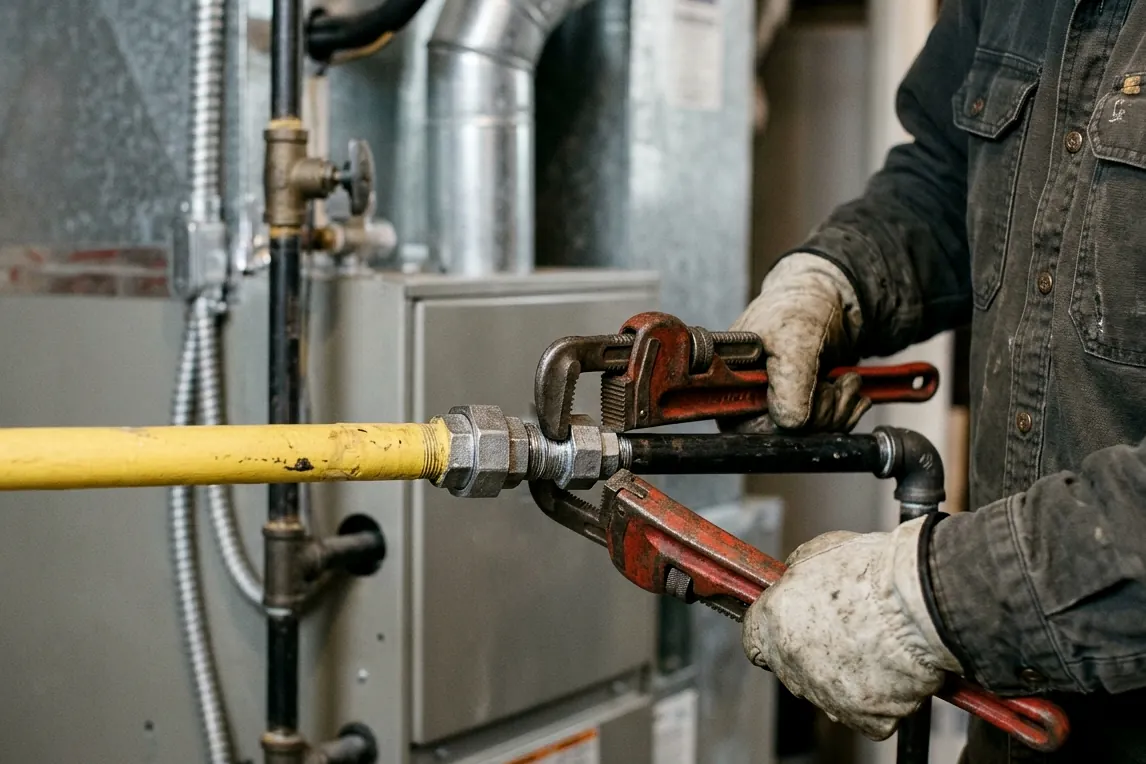
Once water is back on, we flush the line, test the new assembly with a calibrated kit, and record the readings. The results go to the City of Raleigh, Cary, Durham or whichever utility serves you, with the device's make, model, size and serial number. From then on it needs annual backflow testing, and we can put you on our reminder list so the date does not slip.
How the job goes
Confirm the requirement
We check what your utility requires for the connection, then choose the device type and size that meets it without oversizing.
Plan the location
We pick a spot with test access, freeze protection and, for an RPZ, a safe place for relief valve discharge to go.
Install with unions
The assembly is cut in with unions or flanges, properly supported, and set at the height and orientation the manufacturer specifies.
Protect from freezing
Outdoor devices get an insulated enclosure or cover, and we show you how to drain an irrigation assembly before winter.
Test and register
We run the initial test, record the readings, and send the device details and results to your water utility.
Backflow devices in Raleigh's climate
Triangle winters swing between mild weeks and short, sharp freezes, and those freezes are hard on backflow devices sitting above ground. Assemblies on irrigation lines in Brier Creek, North Hills and Cary often sit exposed by the driveway with only a thin bag over them. A properly fitted insulated enclosure, plus draining the device in late fall, prevents most of the cracked bodies we replace each winter.
On the commercial side, restaurants along Glenwood Avenue, retail along Capital Boulevard and office buildings in downtown Raleigh often carry RPZ assemblies on domestic service, fire lines or both. Those need to be installed where relief discharge drains safely, sometimes in a mechanical room with a floor drain. For businesses, we also coordinate installation with the hours you need water, as covered on our commercial plumbing page.
Typical installation and replacement costs
| Job | Typical range |
|---|---|
| Pressure vacuum breaker, 1 inch, residential | $347 to $612 |
| Double check valve assembly, 1 inch | $468 to $793 |
| Reduced pressure zone assembly, 1 inch | $687 to $1,148 |
| Insulated outdoor enclosure added | $187 to $364 |
| Commercial RPZ, 2 inch, installed and tested | $1,642 to $2,893 |
Device type and size, the location and how much pipe must be rerouted, and enclosure or drainage needs move the price most. The final figure comes after a plumber looks at the connection. See every range in our plumbing cost guide.
Questions about backflow preventer installation
Which type of backflow preventer does my house need?
It depends on what the device protects and what your water utility accepts. Many residential irrigation systems use a pressure vacuum breaker or a double check valve assembly. If chemicals or fertilizer are injected into the irrigation, or the hazard is higher, an RPZ is typically required. We confirm the requirement with the utility before buying any hardware for your job.
Why does my new RPZ sometimes spit water?
An RPZ is designed to open its relief valve and discharge water when it senses a possible backflow condition, such as a sudden pressure drop on the street side. A brief discharge after a pressure change is normal. Constant dripping or a steady stream means a check valve or the relief valve is not sealing, and the device needs testing and repair.
Can a frozen backflow preventer be repaired?
Sometimes. If only an internal part or a test cock cracked, it can often be replaced and the device retested. If the bronze body is split, the assembly has to be replaced. Draining the device before freezing weather, or using a well-fitted insulated cover, prevents most of this. The cost of a cover is small next to a new assembly.
Who sends the paperwork to the city after installation?
We do. After installing and testing a new assembly, we send the device details and first test results to the City of Raleigh or the utility that serves your property, and you get a copy. If you have received a compliance letter with a deadline, give us a call at (919) 557-9058 with the letter in hand so we can plan around the date.
Related
Related plumbing services
Backflow Testing
A notice from the City of Raleigh says your backflow assembly is due for its annual test, and you need it tested and...
Learn moreCommercial Plumbing
A restroom is out of service, the grease interceptor is backing up into the kitchen, or a tenant is calling about a...
Learn moreWater Line Repair
There is a soft, wet patch in the yard that never dries out, or your water bill jumped and nothing inside the house is...
Learn moreOutdoor Faucet Repair
The outside spigot drips nonstop, sprays from the handle when the hose is on, or leaks into the crawl space after the...
Learn morePlumbing problem right now?
Call and a person answers, day or night. A plumber from our downtown Raleigh office comes to you.