Drain slope calculator
Enter how long a drain run is and how far it drops. The calculator shows the fall per foot and whether it meets the code for that pipe size.
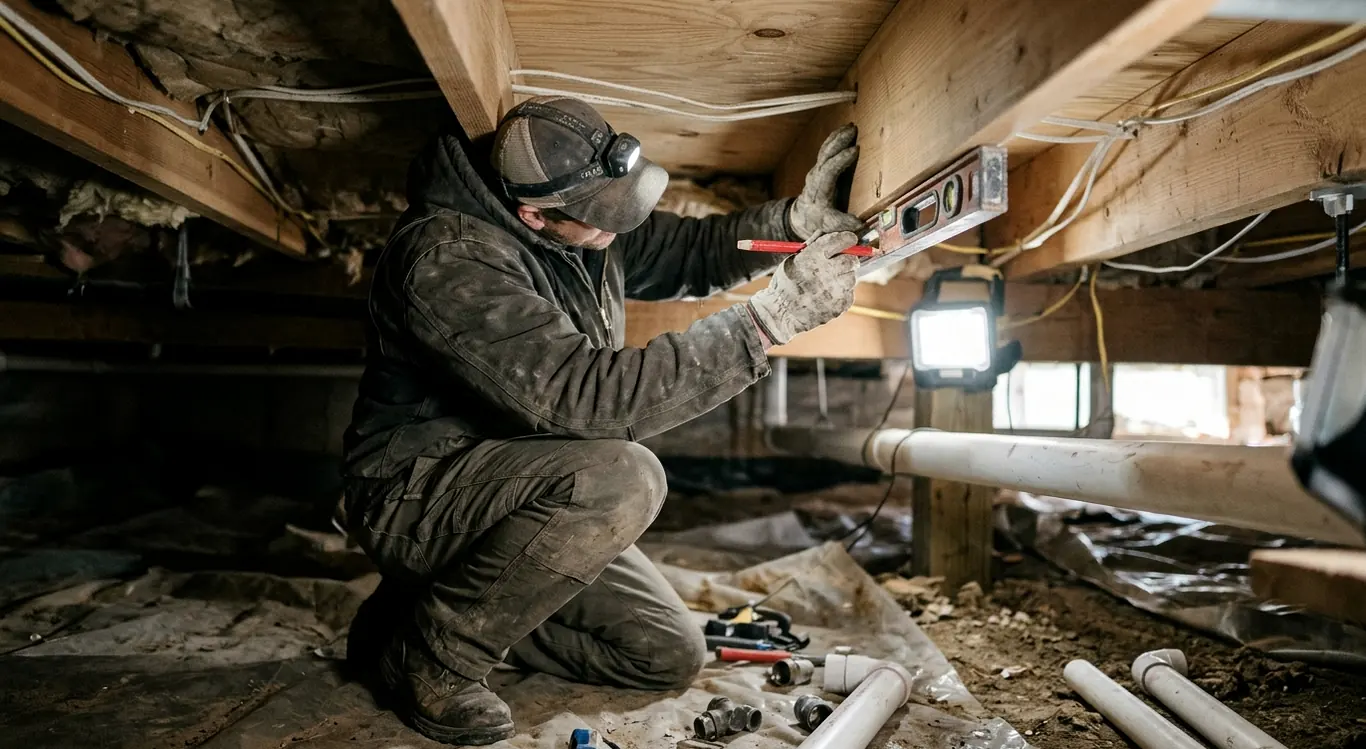
Measure the drop with a level held flat from the high point, down to the pipe at the low point.
Repeat clogs on a flat run? Call (919) 557-9058 and we will re-pitch or replace the section.
Why slope matters
Drain pipes rely on gravity. With too little fall, water still moves but solids and grease settle, and the line clogs again a few weeks after it is cleared. With far too much fall on a long run, water can outrun the solids it is supposed to carry. The plumbing code sets a minimum so the line carries both.
For pipes up to 2.5 inches across, the minimum is a quarter inch of fall for every foot of run. For 3 inch to 6 inch pipe, the minimum is an eighth of an inch per foot. Most kitchen and bathroom branch lines are 1.5 or 2 inch; most main building drains are 3 or 4 inch.
How to measure a run
In a crawl space or basement, find two points on the same pipe a known distance apart. Hold a level horizontally from the higher point and measure straight down to the pipe at the lower point. That measurement is the drop. Divide it by the distance and you have fall per foot; the calculator does the math and the conversion to fractions.
When to call
If a run reads too flat, or a pipe sags between hangers so that one section holds water, call us. We can add hangers, re-pitch the run or replace the section. Slow drains in several fixtures at once usually point to the main line instead, and a sewer camera inspection shows exactly where the trouble is.
Related: drain cleaning, sewer camera inspection, crawl space plumbing repair.
Drain slope questions
Is a steeper drain always better?
Not on long runs. Very steep pipe can let water race ahead and leave solids behind. Short drops, such as the vertical part of a stack, are fine. On long horizontal runs we aim for the code minimum up to about half an inch per foot.
Can a drain lose its slope over time?
Yes. Hangers loosen, joists sag, and in crawl spaces the soil under a buried section can settle. A pipe that once had the right fall can develop a belly that holds water and collects debris.
What if my measurement is close to the minimum?
A reading right at the minimum is acceptable. If the line still clogs often, the cause is more likely buildup, roots or a belly elsewhere in the run, which a camera inspection can find quickly.
Plumbing problem right now?
Call and a person answers, day or night. A plumber from our downtown Raleigh office comes to you.