Drains and sewer
Hydro jetting to scour grease and roots from Raleigh lines
Your sewer or kitchen line keeps clogging after it has been snaked, and you want the inside of the pipe cleaned out instead of punched through one more time.
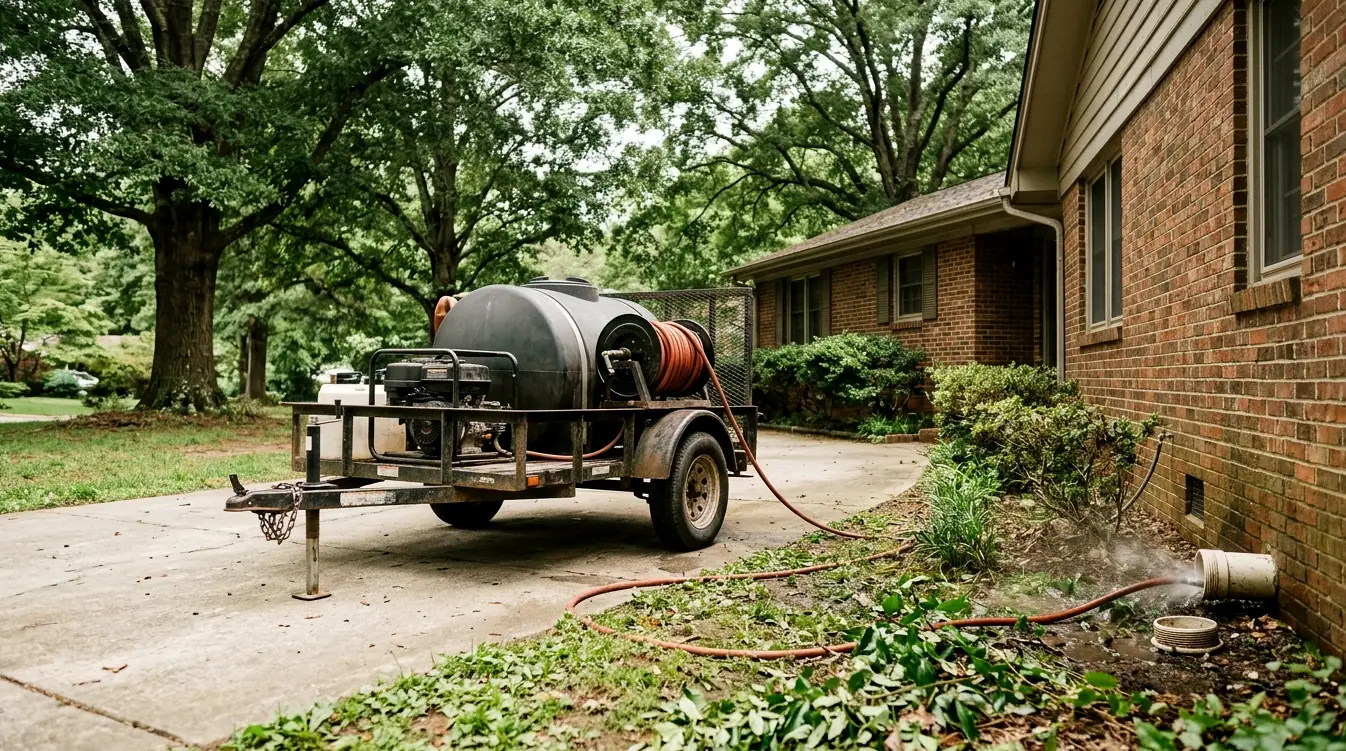
First step on arrival: camera the line first
A drain cable opens a hole through a clog. Hydro jetting cleans the pipe. A jetter pushes water at high pressure through a hose with a nozzle that sprays in several directions, scouring grease, scale, sludge and fine roots off the pipe walls and flushing them downstream. Serenity Plumbing uses jetting for lines that clog again and again, for heavy grease in kitchen lines and for roots that a cable only trims back.
Jetting is not right for every pipe. Cracked clay, badly scaled cast iron or a line with a broken section can be damaged by high pressure, so we look at the line with a sewer camera first. If the pipe is sound, jetting restores most of its original diameter. If it is not, you see the damage on screen and we talk about repair before any water goes in.
Signs a line needs jetting, not another snaking
Clogs return within weeks
A line that backs up again a few weeks after being cabled usually has buildup coating the walls that the cable did not remove.
Heavy kitchen grease
Kitchen lines in busy homes collect thick grease layers that a cable pokes through but leaves stuck to the pipe walls.
Fine roots in the sewer
Hair-like roots entering through joints grow back quickly after cabling, and jetting clears more of them from the pipe.
Scale in cast iron drains
Older cast iron with rough scale inside narrows the drain, and controlled jetting can clear it where the pipe is still sound.
Slow drains house-wide
Several fixtures that drain slowly without a full blockage often point to sludge built up along the length of the main line.
Odor from the main line
A sewer smell from floor drains or the cleanout can come from waste trapped in buildup along the bottom of the pipe.
How our plumbers jet a sewer or drain line
Every jetting job starts with a camera. The plumber feeds the camera through a cleanout and records the line, looking at pipe material, joints, any cracks and how much buildup is present. That footage tells us whether jetting is safe, what nozzle and pressure to use and whether there is a problem, such as a collapsed section, that no amount of cleaning will fix.
If the line is sound, the plumber sets up the jetter near the cleanout and runs the hose to the far end of the line, then works back slowly. Rear-facing jets pull the hose along and scour the walls, while a front jet breaks through blockages. Pressure is matched to the pipe, gentler for old cast iron, stronger for PVC, so the line gets cleaned without being harmed.
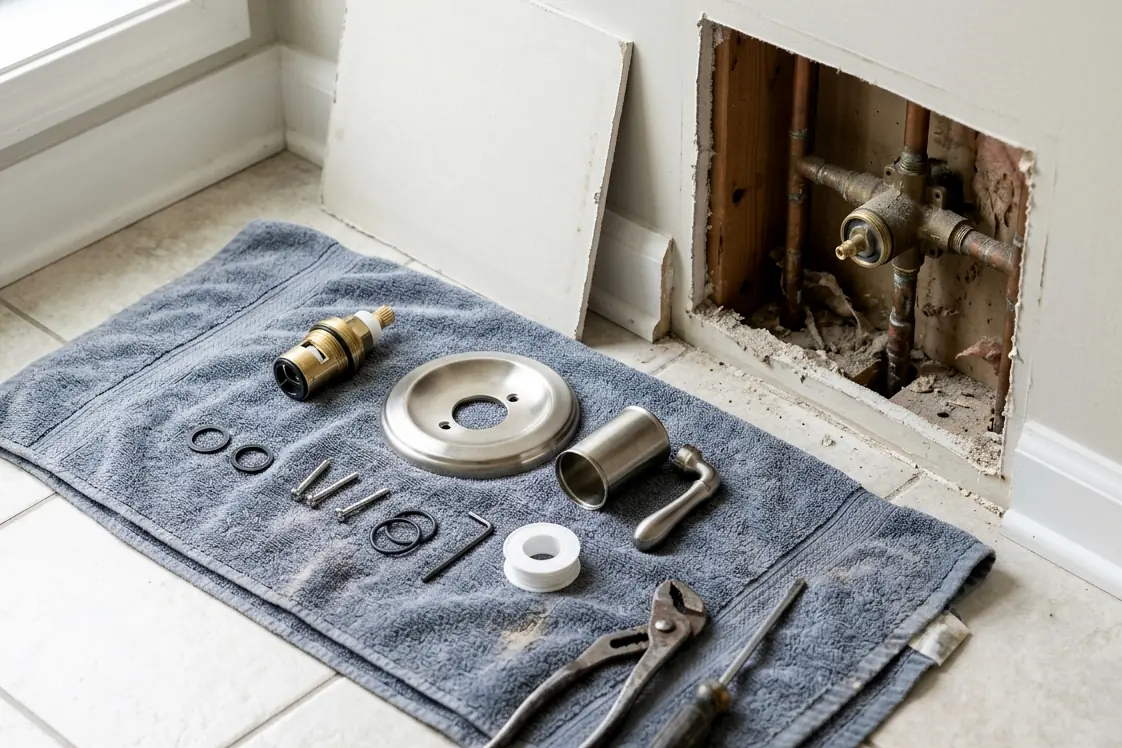
Once the jetting is complete, the camera goes back in. You see the same sections that were coated before, now clean, and any joint issues or cracks that buildup was hiding. If roots are entering through a joint, the plumber marks the location and depth, which helps if you choose a spot repair or trenchless lining later. Most homes that had monthly clogs get long stretches of normal drainage after a full jetting.
How the job goes
Camera the line first
A camera inspection checks pipe material, joints and buildup so we know whether jetting is safe and which nozzle to use.
Set up at cleanout
The jetter is positioned at an accessible cleanout, and the hose is fed to the far end of the line before cleaning begins.
Scour the pipe walls
Water at controlled pressure scours grease, scale and roots off the inside of the pipe as the hose is pulled back slowly.
Flush the debris
Loosened material is flushed downstream to the city main or septic tank, leaving the line open to its full diameter.
Camera the line again
A second camera pass confirms the line is clean and shows any cracks or joint gaps the buildup was hiding before.
Why jetting suits many Raleigh sewer lines
Raleigh's mature tree canopy is lovely above ground and hard on sewer lines below it. Willow oaks, maples and other large street trees in neighborhoods like Hayes Barton and Cameron Park send fine roots into the joints of older clay laterals. Cabling cuts a path through, but the root mass stays on the walls and grows back. Jetting removes far more of it, which stretches the time between backups.
Grease is the other common reason for jetting in the Triangle. Kitchen lines in larger homes often run a long way to reach the main stack, and with a disposal in daily use they coat quickly. Small restaurants and shops downtown and in Durham face the same issue at a larger scale. Where a home has a cleanout near the foundation, jetting is straightforward. If there is none, adding a sewer cleanout first can make the job and every future one easier.
Hydro jetting costs in the Raleigh area
| Job | Typical range |
|---|---|
| Camera inspection before jetting | $187 to $342 |
| Residential main line jetting | $437 to $864 |
| Kitchen branch line jetting | $318 to $593 |
| Root cutting with jetting, heavy roots | $543 to $1,036 |
Line length, cleanout access and how heavy the grease or roots are decide the time on site. Lines without a usable cleanout may need one added first. See every range in our plumbing cost guide.
Questions about hydro jetting
Can hydro jetting damage old pipes?
It can if the pipe is already cracked, badly corroded or missing a section, which is why we always run a camera first. Sound clay, cast iron and PVC handle jetting well when the pressure and nozzle suit the pipe. If the footage shows serious damage, we do not jet that section. We show you the problem and explain repair options instead.
How is jetting different from snaking a drain?
A snake, or cable, spins a cutting head through the clog and opens a path, which works well for single blockages. Jetting uses high pressure water to clean the full inside of the pipe, removing grease, scale and root growth along its length. Snaking is faster and lower cost for one-off clogs. Jetting is the better choice for lines that keep clogging.
How often should a sewer line be jetted?
Most homes never need it on a schedule. If your line has a known root problem or a history of grease clogs, jetting every one to two years can prevent backups until a permanent repair is made. The camera footage from your first jetting gives us a good basis for a sensible interval.
Will jetting fix roots in my sewer line for good?
No. Jetting removes the roots inside the pipe, but they entered through a joint gap or crack that is still there, and they will grow back over time. Jetting buys you a clean line and a clear look at where the roots get in. A lasting fix means sealing or replacing that section with a spot repair, lining or new pipe.
Related
Related plumbing services
Sewer Camera Inspection
You are buying an older home, a sewer line keeps backing up, or you have been told the line needs replacing and want to...
Learn moreMain Line Clog Clearing
Sewage is coming up in the lowest tub or shower, toilets gurgle when the washer drains, and every fixture in the house...
Learn moreTrenchless Sewer Repair
The camera found a cracked or root-filled sewer line, but it runs under a driveway, a big oak or a finished patio you...
Learn moreDrain Cleaning
The kitchen sink holds water after the dishes, the shower drains around your ankles, or one bathroom keeps clogging no...
Learn morePlumbing problem right now?
Call and a person answers, day or night. A plumber from our downtown Raleigh office comes to you.