Drains and sewer
Trenchless sewer lining and bursting for Raleigh yards and driveways
The camera found a cracked or root-filled sewer line, but it runs under a driveway, a big oak or a finished patio you do not want torn up.
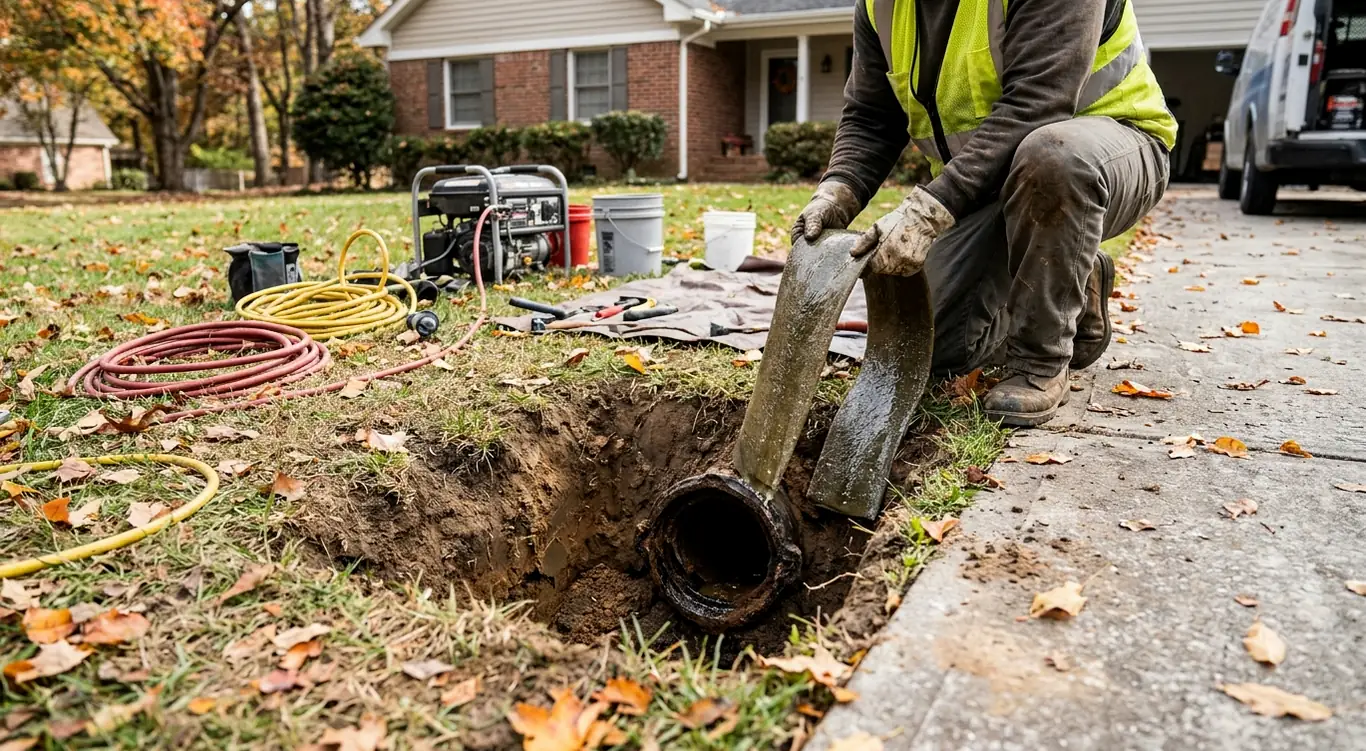
First step on arrival: clean the line
Trenchless repair rebuilds a sewer line from the inside or pulls a new pipe through the old one, using one or two small access pits instead of a trench along the whole route. For Raleigh homes where the lateral passes under concrete, mature trees or plantings, it can save a lot of surface restoration. Serenity Plumbing uses two methods: cured-in-place lining, which forms a new pipe inside the old one, and pipe bursting, which replaces the old pipe along the same path.
Trenchless is not right for every line. Lining needs a pipe that still holds its shape, so a collapsed section or a deep belly has to be dug and fixed first. Bursting needs room for a launch pit and a pipe that can be fractured. We decide after a camera inspection and a measured locate, and if open digging is the better value, we will tell you and price a conventional sewer repair instead.
When trenchless repair is worth considering
Line under a driveway
Cracks or roots sit beneath concrete or pavers, where digging would mean cutting out and replacing a large slab.
A tree you want kept
A mature oak or maple grows over the line, and a trench would cut through the roots that keep the tree standing.
Cracked but still round
The camera shows hairline or lengthwise cracks while the pipe keeps its round shape, which is exactly what lining needs.
Root entry at many joints
Roots enter at joint after joint along clay pipe, and one continuous liner can close all of them without opening the yard.
Pipe under a patio
The lateral runs below a finished outdoor space, retaining wall or porch that would be costly to remove and rebuild.
Old pipe, usable path
A failing line sits on a usable route, and pipe bursting can place new pipe along that same path without a trench.
How Serenity decides between lining, bursting and digging
First the line is cleaned, usually with hydro jetting to strip roots and scale back to the pipe wall, and then filmed end to end. We look at shape, cracks, offsets, sags and the location of every connection. Lining works best on round pipe with cracks and root entry. Bursting suits pipe that is broken but still passable. Bellies and fully collapsed spots are dug and corrected before any trenchless method is used.
For lining, we measure the run, wet out a resin-saturated liner, and pull or invert it into the cleaned pipe from an access point. An inflatable bladder presses the liner tight against the old wall while the resin cures into a hard, jointless pipe. Connections and cleanouts are then reopened from inside. The finished pipe is slightly smaller in diameter than the original, but its smooth wall carries flow well.
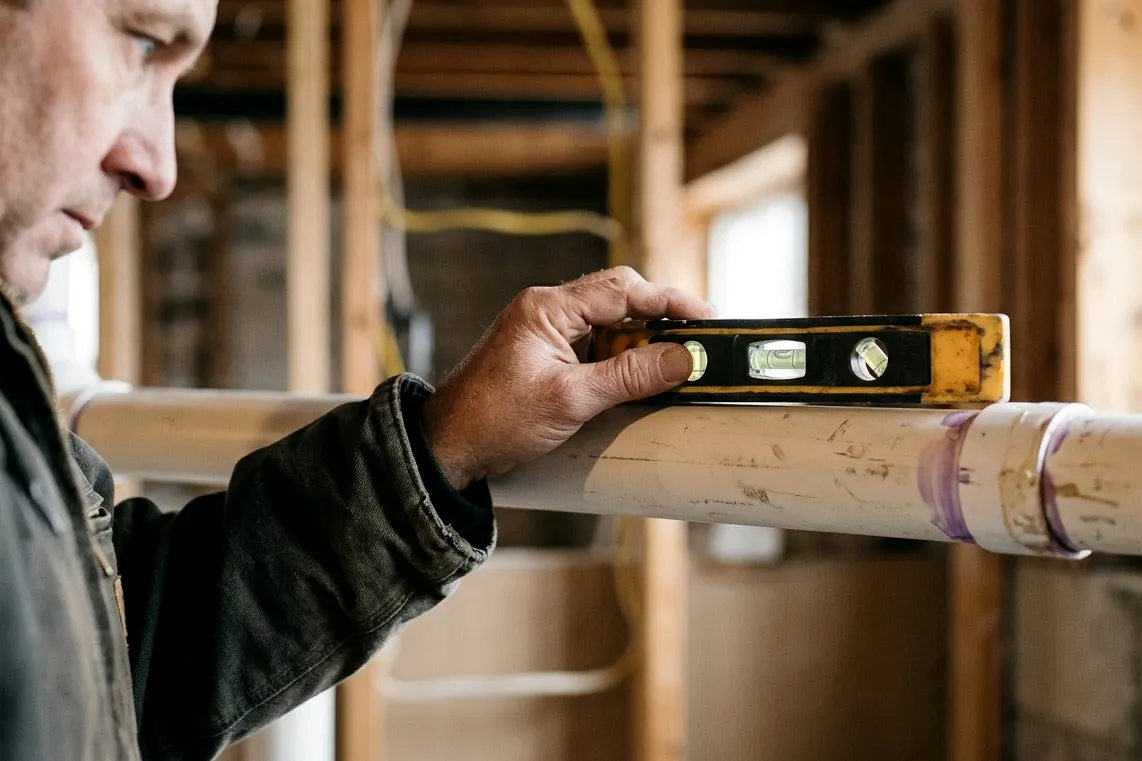
For bursting, we dig a launch pit near the house and a receiving pit near the street connection. A bursting head is pulled through the old line, cracking it outward while new high-density polyethylene pipe follows behind on the same path. Either way, the job ends with a camera run you can watch from start to finish. To talk through your line and what the camera showed, call (919) 557-9058; we answer 24/7.
How the job goes
Clean the line
Roots, grease and scale are cleared with high-pressure water so the camera, and later the liner, see the actual pipe wall.
Film and measure
We record the full run, measure lengths to every connection and bend, and confirm which method the pipe condition supports.
Open access points
Small pits or existing cleanouts give us entry, sized for the method and placed away from trees and concrete where possible.
Install new pipe
The liner is installed and cured, or a new polyethylene pipe is pulled through as the old one is burst apart.
Reopen and verify
Connections are reinstated, the access points are closed, and a final camera run confirms a clear, continuous line to the street.
Trenchless work around Raleigh trees and hardscape
Many Raleigh lots built in the decades after World War II, from North Hills to the streets around Lake Johnson, put the sewer lateral under the driveway, and those driveways are now surrounded by trees that have been growing for a long time. Willow oaks and maples send fine roots into clay and cast iron joints. Lining seals those joints in a single pass, which is often why homeowners in these areas choose trenchless over a trench.
Soil plays a part too. Wake County's red clay is dense and holds water, which makes trenches slow to dig and slow to settle after backfill, especially after summer storms or rain from hurricane remnants. Smaller access pits limit that disturbance. In towns like Cary and Apex, where many homes sit in planned subdivisions with HOA rules on lawns and driveways, keeping the surface intact can also save a round of restoration work.
What trenchless sewer work typically costs
| Job | Typical range |
|---|---|
| Cleaning and camera assessment | $287 to $564 |
| Short point repair liner | $1,873 to $3,642 |
| Full lateral lining | $5,483 to $11,267 |
| Pipe bursting, full lateral | $6,127 to $12,894 |
| Digging out and fixing a belly before lining | $1,467 to $3,289 |
Length, the number of connections to reinstate, pipe diameter and access all affect the price. A plumber gives your actual number after the line has been cleaned and filmed. See every range in our plumbing cost guide.
Questions about trenchless sewer repair
Is a lined sewer pipe as strong as a new one?
A cured liner forms a jointless pipe inside the old one, and it does not depend on the old pipe for strength once it hardens. Its biggest advantage over the original clay is that there are no joints for roots to enter. It will not correct a sag, which is why we fix low spots before lining.
Can you line a sewer pipe that has collapsed?
Not at the collapsed point. A liner needs a passage to travel through and a wall to press against. If the camera finds a crushed section, we dig at that spot, replace it with new pipe, and then line the rest of the run if the remaining pipe is a good candidate. Pipe bursting can sometimes push through a partial collapse.
Will trenchless repair save me money compared to digging?
Sometimes, not always. On a short lateral under open lawn, a conventional repair can cost less. The savings show up when the line runs under a driveway, patio, mature trees or a deep section, where restoring the surface after a trench would add a large bill. We price both options when both are realistic for your line.
Do I need to stay off my drains while the liner cures?
Yes, for a few hours. While the resin hardens, nothing can flow through the line, so sinks, toilets, showers and the washing machine are off limits. We tell you the window before we start, and most homes are back to normal use the same day once the connections are reopened and filmed.
Related
Related plumbing services
Sewer Line Repair
Sewage is backing into a tub or floor drain, or the cleanout cap is weeping, and the line between your house and the...
Learn moreSewer Line Replacement
Your sewer line has been cleared, patched and cleared again, and the camera now shows cracks, sags or crushed pipe...
Learn moreHydro Jetting
Your sewer or kitchen line keeps clogging after it has been snaked, and you want the inside of the pipe cleaned out...
Learn moreSewer Camera Inspection
You are buying an older home, a sewer line keeps backing up, or you have been told the line needs replacing and want to...
Learn morePlumbing problem right now?
Call and a person answers, day or night. A plumber from our downtown Raleigh office comes to you.