Drains and sewer
Clearing a backed up main sewer line in Raleigh
Sewage is coming up in the lowest tub or shower, toilets gurgle when the washer drains, and every fixture in the house is backing up at once.
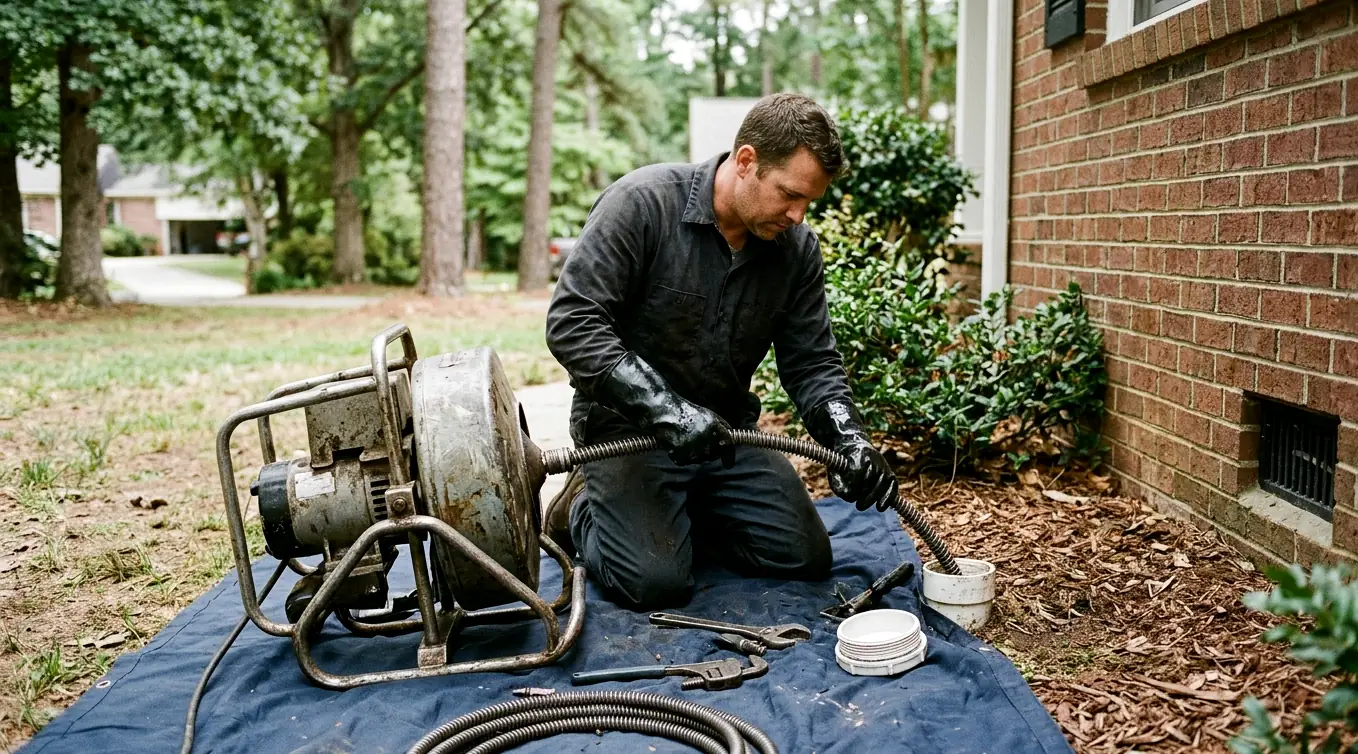
First step on arrival: stop all water use
When the main sewer line clogs, every drain in the house shares one exit, and that exit is blocked. Water goes to the lowest opening it can find, which is usually a basement floor drain, a first floor shower or a tub. The first step is to stop using water: no flushing, no laundry, no dishwasher. Then call (919) 557-9058. Serenity Plumbing answers day or night and clears main line clogs from the outside cleanout whenever one is available.
Main line clogs usually come from roots, grease, flushed wipes, a sag that collects waste or a broken pipe. Clearing the line gets the house working again, but knowing the cause is what keeps it working. After the line flows, we can run a sewer camera to see what caused the backup and whether it is a one-time event or a sign the line needs repair.
How to tell the main line is blocked
Several drains slow together
Sinks, tubs and toilets on different sides of the house all drain slowly at once, which points to the shared main line.
Water rises in the shower
Running the washing machine or flushing a toilet makes water come up in a nearby tub or shower drain on the lowest floor.
Toilets gurgle and bubble
Toilets bubble or gurgle when other fixtures drain because air is being pushed back through the system by the blockage.
Water at the cleanout
The outdoor cleanout cap is wet, or wastewater is seeping from it, meaning the line is full and backing up to that point.
Sewage in a floor drain
Dark water or sewage rising from a basement or garage floor drain is a clear sign the main line beyond it is blocked.
Sewer smell outside
A sewer odor in the yard near the cleanout or along the line can come from a blockage or a break that needs attention.
How we clear a main line backup
The plumber looks first for the outside cleanout, a capped pipe near the foundation or in the yard. Working from there keeps the mess out of the house and gives the cable a straight run toward the street. If there is no cleanout, the plumber may pull a toilet or use a roof vent. Adding a cleanout makes future clearings easier.
Before opening the cleanout, the plumber prepares for the water that will come out, because a backed up line is full of wastewater waiting to drain. Then a large drain machine with a cutting head suited to the line feeds into the pipe until it reaches the blockage. Roots get cut, grease and wipes get broken up and pulled back, and the plumber runs the cable past the clog and through to the city main or septic tank to open the full line.
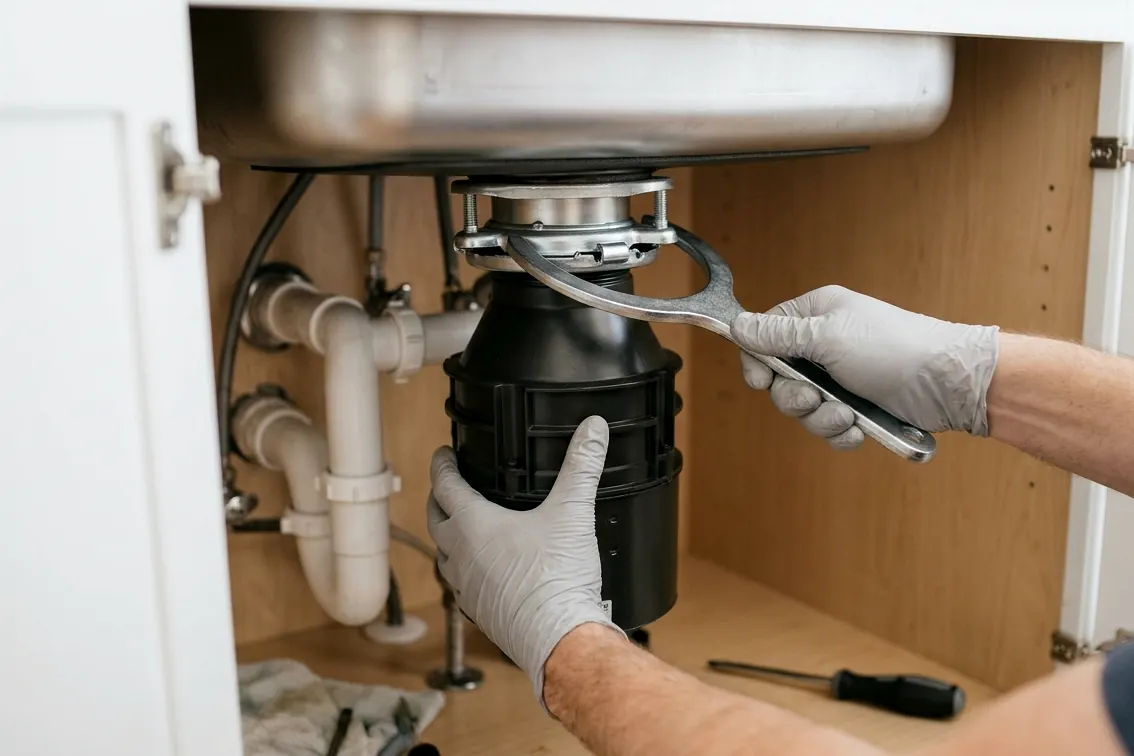
Once water drains freely, the plumber runs several fixtures to confirm flow and cleans up the work area. If any sewage reached the house, we tell you plainly what needs cleaning. A camera inspection is the logical next step for any line that has backed up, because what the cable pulled back, such as roots or pieces of clay, says a lot about the line's condition.
How the job goes
Stop all water use
Stop flushing, washing and running fixtures so no more water pushes into the backed up line while a plumber is on the way.
Find the cleanout
The plumber locates the outdoor cleanout, or another access point if none exists, and prepares for the water inside the full line.
Cable the main line
A large drain machine with a cutting head runs through the line, cutting roots and breaking up grease, wipes and debris.
Confirm full flow
Fixtures throughout the house are run to make sure the line drains normally, and the work area is cleaned up afterward.
Camera and advise
We recommend a camera look to find the cause and explain whether the line needs maintenance, a spot repair or replacement.
Why Raleigh main lines back up
In Raleigh's older neighborhoods, many homes still drain through clay sewer laterals or cast iron, and those pipes have joints that roots can find. Big trees in front yards along streets in Oakwood and Five Points are a common source. Our article on sewer backups in older neighborhoods explains the patterns we see most, including which seasons bring the most root growth.
Newer homes are more likely to clog from things that should not be flushed, especially wipes labeled as flushable, or from grease from a busy kitchen. Heavy summer storms and tropical remnants can make things worse when an older system takes on extra water. The section of line from your house to the city sewer main is generally the homeowner's to maintain, while City of Raleigh Public Utilities handles the main in the street.
Main line clog clearing prices
| Job | Typical range |
|---|---|
| Main line cleared from an outdoor cleanout | $264 to $517 |
| Main line cleared through a toilet or roof vent | $347 to $638 |
| Camera inspection after clearing | $187 to $342 |
| After-hours service call | $137 to $289 |
Cleanout access, line length and how dense the roots or debris are drive the cost. Night and holiday calls carry a higher service call. See every range in our plumbing cost guide.
Questions about main line clog clearing
Is a main sewer line clog an emergency?
Usually, yes. A blocked main means wastewater has nowhere to go, and any water used in the house can come back up through the lowest drain. That creates a health and cleanup problem quickly. Stop using water, keep children and pets away from any sewage and call. If only one fixture is slow and the rest drain fine, it can usually wait until morning.
Where is my sewer cleanout likely to be?
In most Raleigh homes, look along the foundation on the side closest to the street, or in the yard between the house and the curb. It is a short pipe, usually white PVC or black, with a threaded cap, sometimes in a small round box flush with the ground. Older homes may not have an outdoor one, so the plumber may need another access point.
Who pays when the sewer line backs up, me or the city?
In general, the homeowner is responsible for the lateral that runs from the house to the city sewer main, and the city maintains the main itself. If the clog is in your lateral, the repair is private. If the camera shows the problem is in the city main, the plumber will tell you.
Why do I have sewage in my shower but not my sinks?
Water backs up to the lowest open drain on the system. In most homes that is a first floor shower, tub or floor drain, so it shows sewage first while sinks higher up still look normal. It means the blockage is in the main line downstream of all of them, not in the shower drain itself.
Related
Related plumbing services
Sewer Camera Inspection
You are buying an older home, a sewer line keeps backing up, or you have been told the line needs replacing and want to...
Learn moreHydro Jetting
Your sewer or kitchen line keeps clogging after it has been snaked, and you want the inside of the pipe cleaned out...
Learn moreSewer Cleanout Installation
The main line backed up and the plumber had to pull a toilet or climb onto the roof to reach it, because your house has...
Learn moreSewer Line Repair
Sewage is backing into a tub or floor drain, or the cleanout cap is weeping, and the line between your house and the...
Learn morePlumbing problem right now?
Call and a person answers, day or night. A plumber from our downtown Raleigh office comes to you.