Yes. In Raleigh and across North Carolina, replacing a water heater generally requires a plumbing permit and a final inspection, even when the new unit goes in the same spot as the old one, and the plumber doing the work normally handles it.
Why a like-for-like swap still needs a permit
It can feel like overkill. You are taking out a 50 gallon tank and putting in another one where the old one sat for a decade. But a water heater is a pressurized vessel full of scalding water, and most models also connect to gas or a high-amperage electrical circuit. North Carolina treats the replacement as new installation work, which is why a permit and inspection apply even when nothing about the location changes. The inspection is a second set of eyes on the parts that cause fires, scalds and floods when they are done wrong.
Codes also change faster than water heaters wear out. A tank installed fifteen years ago may have met every rule at the time and still fall short today on things like the relief valve discharge line, the drain pan or the venting. Replacement is the moment those gaps get closed, and the permit is how the local office makes sure they actually are closed before the job is called finished.
Which office issues the permit
Where you live decides who you deal with. Inside Raleigh city limits, permits and inspections run through the City of Raleigh's development services staff. In unincorporated parts of Wake County, the county's permitting office handles it. Towns such as Cary, Apex, Wake Forest and Holly Springs run their own inspections, and so do Durham and the other counties around the Triangle. A Raleigh mailing address is not always inside the city, so it is worth checking which jurisdiction your property falls in.
In practice the plumbing contractor doing the replacement pulls the permit, schedules the inspection and leaves the work ready to be seen. Some jurisdictions also issue homeowner permits for work on an owner-occupied house, but because a water heater ties into gas or a large electrical circuit, most people leave the whole job, permit included, to a plumber who does this work every week.
What the inspector looks at
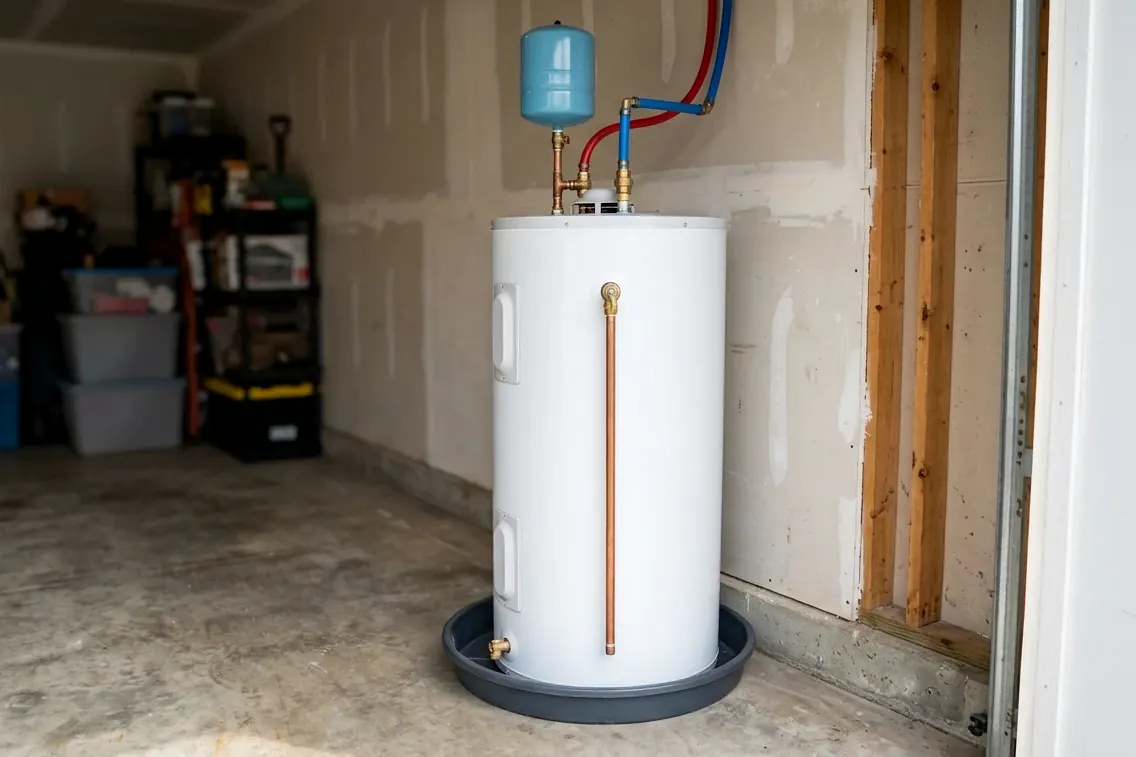
Inspectors are not there to judge the brand you picked. They look at the parts of the installation that keep the tank safe when something goes wrong. The list below covers the items that most often get attention on a Triangle home, and they apply to both gas and electric units unless noted. A tankless unit gets a similar look, with extra attention to gas sizing and venting.
Attic installations get extra scrutiny because plenty of Triangle houses and townhomes put the water heater above a ceiling. A failed tank there with no pan, or a pan drain that goes nowhere, can bring down drywall in an afternoon. If your current unit sits in the attic, expect the new one to need a working pan and drain line even if the old one never had them.
- Temperature and pressure (T&P) relief valve, with a full-size discharge pipe ending in an approved spot
- Drain pan with its own drain line where a leak could damage the house
- Expansion tank when a pressure reducing valve or check valve makes the system closed
- Venting, combustion air, clearances, gas shut-off and sediment trap on gas units
- Electrical disconnect and proper wiring connection on electric units
- Cold supply shut-off valve and protection where different metals meet
How the permit affects price and timing
The permit fee is a small part of the bill, and it is normally built into the plumber's quote rather than added as a surprise. For a standard tank replacement in the Raleigh area, typical installed prices run about $1,487 to $2,940 depending on size, fuel type, location in the house and what needs to be brought up to code. Attic jobs, tight closets and gas venting changes push toward the top of that range. The real number comes after a plumber sees the setup.
Timing rarely slows things down. The new heater goes in and the house has hot water the same day. The inspection happens afterward, often within a few business days, and the inspector looks over the finished work. If they flag something, the plumber corrects it and the permit is closed out. You do not have to wait on the city before taking a hot shower.
What happens if the work is never permitted
Plenty of water heaters in the Triangle went in without a permit, and nothing happened for years. The trouble tends to show up later. A buyer's home inspector may note a missing expansion tank or a relief line that ends in the wrong place, and suddenly it is a repair item in the middle of a sale. An unpermitted gas installation with poor venting is a carbon monoxide risk, not just paperwork. And if a tank floods the house, an insurance adjuster may ask how and when it was installed.
- Ask whoever replaces your heater to confirm the permit is pulled
- Keep the permit number or final inspection record with your house papers
- Expect the relief line and pan drain to be left visible for the inspector
- If you bought a house with an unpermitted heater, have it checked at the next service visit
Repair versus replacement
Not every water heater problem means a new unit and a new permit. Replacing a heating element, thermostat, gas control or relief valve on an otherwise healthy tank is ordinary water heater repair, and it usually does not trigger the same permit as a full swap. A leaking tank is different: the steel has rusted through and there is no repair. If you are weighing a switch to a tankless unit, expect a permit for that too, plus possible gas line or electrical changes.
If you are not sure which side of that line you are on, Serenity Plumbing answers 24/7. Give us a call at (919) 557-9058, describe what the heater is doing, and a plumber can tell you whether it sounds like a part or a replacement. If it is a replacement, the permit and inspection are handled as part of the job, so there is nothing extra for you to file or track.
Follow-up questions
Does moving to a bigger water heater change the permit?
The permit type is the same, but a size change can give the inspector more to check. A larger gas unit may need a bigger vent or gas line, and a larger electric unit may need a heavier circuit. Moving the heater to a new spot in the house also counts as new work, so expect closer attention to drains, venting and access.
Is an expansion tank always required with a new water heater?
Not always. It is required when the plumbing system is closed, meaning a pressure reducing valve, check valve or backflow device stops heated water from expanding back toward the street. Many Raleigh-area homes have a pressure reducing valve, so many replacements end up with an expansion tank. A plumber can tell by looking at the main line.