Shut off the main water valve, keep clear of any water near outlets or the electrical panel, open faucets to drain the lines, then move valuables, start soaking up water and call a plumber.
Step one: stop the water
Everything else waits until the water is off, including cleanup and phone calls. Go straight to the main shut-off valve, usually in the crawl space, garage, utility closet or beside the water heater. Turn a lever handle a quarter turn so it sits across the pipe, or turn a round handle clockwise until it stops. If you have never found the valve, our guide on how to shut off the water to your house covers where it usually is in Triangle homes.
If the main valve will not close or the water keeps running, use the shut-off at the water meter near the street. If you cannot reach that either, call your water utility's emergency line. In a home on a private well, turn off the breaker for the well pump. A burst half-inch line can release several gallons a minute, so speed matters more than anything else in the first few minutes. Send someone else to the valve while you start moving things if more than one person is home.
Step two: stay safe around electricity
Water and electricity together are the real danger in a flooded room. If water is near outlets, cords, a space heater, the electrical panel or ceiling light fixtures, do not walk through it. If you can reach the main breaker from a completely dry spot, switch it off there. If you cannot, leave the area and call the power company.
A ceiling that is sagging or bulging with water can come down without much warning. Keep people and pets out from under it. If it needs to be relieved, a small hole made from the side with a screwdriver, with a bucket below, lets water out in a controlled way. Never stand directly under a heavy wet ceiling while doing it, and skip it entirely if a light fixture is nearby. When in doubt, leave the room, close the door and let a professional deal with it.
- Keep out of standing water near outlets, cords or the panel
- Turn off the main breaker only from a dry spot
- Stay clear of sagging, bulging or dripping ceilings
- Turn off an electric water heater at its breaker once the water is off
Step three: drain the lines and limit damage
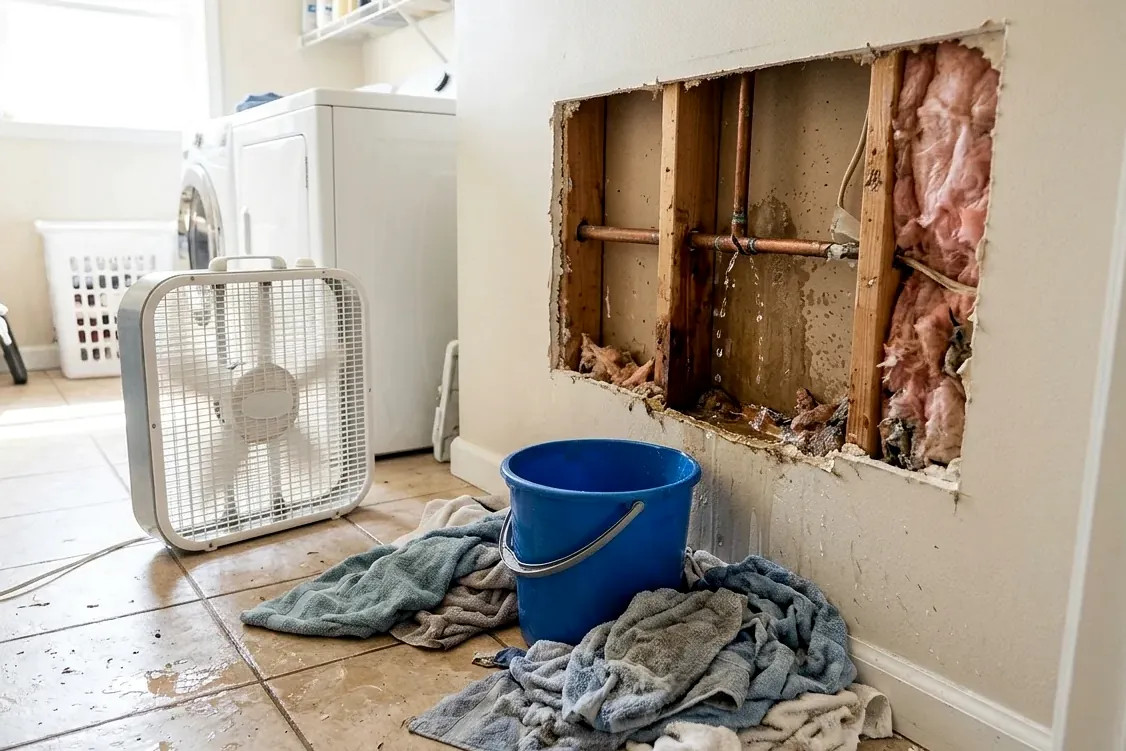
With the main valve closed, open a faucet on the lowest level of the house and one on the top floor. That drains the pressure and much of the water left in the pipes, which slows the leak at the break. Flush toilets once to empty the tanks. If the break is on a hot water line, turn off the water heater at the breaker, or set a gas unit to pilot, to protect the tank while it sits without water.
Then turn to the damage. The goal in the first hour is to keep water from spreading and soaking into materials that are hard to dry, like hardwood floors, carpet pad and drywall. Moving things now saves far more than it costs in time, and fans running in the room help start the drying even before anyone else arrives at the house.
- Move rugs, electronics, furniture and papers out of the wet area
- Put foil or plastic under furniture legs that cannot be moved
- Mop, use towels or a wet vacuum on standing water
- Open cabinet doors and run fans to start the drying
Step four: document and call
Before cleaning up too much, take photos and a short video of the break, the wet areas and damaged items. If you file an insurance claim, these help show what happened and how bad it was. Keep any damaged parts of the pipe or fitting if you can. They can show what failed, whether it was a frozen pipe, a corroded fitting or a split supply hose.
Then call a plumber. Serenity answers 24/7, including nights, weekends and holidays, at (919) 557-9058. Burst pipe repair usually means cutting out the damaged section and putting in new pipe and fittings, then checking nearby lines for more damage. If the break happened in a freeze, a plumber will also look for other frozen sections before the water comes back on.
Why pipes burst in Triangle homes
In the Raleigh area, the most common causes are freezing, aging pipe and fittings, and high water pressure. A hard freeze can split a line in an exterior wall, an unheated crawl space or an attic. Old polybutylene fittings, corroded galvanized pipe and worn supply hoses on washers and toilets can fail on an ordinary day without any warning at all.
Freeze breaks often do not leak until the ice thaws, so a pipe can split overnight and start spraying the next afternoon when the temperature rises. After a cold snap, check crawl spaces and exterior walls for wet spots. If you find a frozen line that has not burst yet, frozen pipe repair can thaw it safely before the pressure builds.
What repair typically costs
For an accessible break in a crawl space or an unfinished area, repair in the Raleigh area often runs about $287 to $694. Breaks inside finished walls or ceilings cost more because of the access needed, and after-hours visits can add to the bill. Drywall, flooring and drying are separate from the plumbing repair. The real price is set once a plumber sees the break and where it sits.
If the break came from old pipe, ask whether nearby lines show the same wear. A single repair fixes the leak in front of you, but in a house with aging polybutylene or galvanized pipe, it may be the first of several. Knowing that now helps you plan rather than react the next time a line fails on a cold night.
Follow-up questions
Can I turn the water back on after a temporary patch?
A pipe clamp or repair tape can slow a small leak for a short time, but it is not a lasting fix and can fail under full pressure. If you use one, turn the water on slowly and watch it closely. It is safer to leave the main off, or keep it on only while someone is watching, until the pipe is properly repaired.
Do I need to dry out walls after a burst pipe?
Usually yes. Water that soaks into drywall, insulation and framing can lead to mold within a day or two if it is not dried. Small areas may dry with fans and open cavities, but larger leaks often need a water damage restoration company with moisture meters and drying equipment, separate from the plumbing repair.